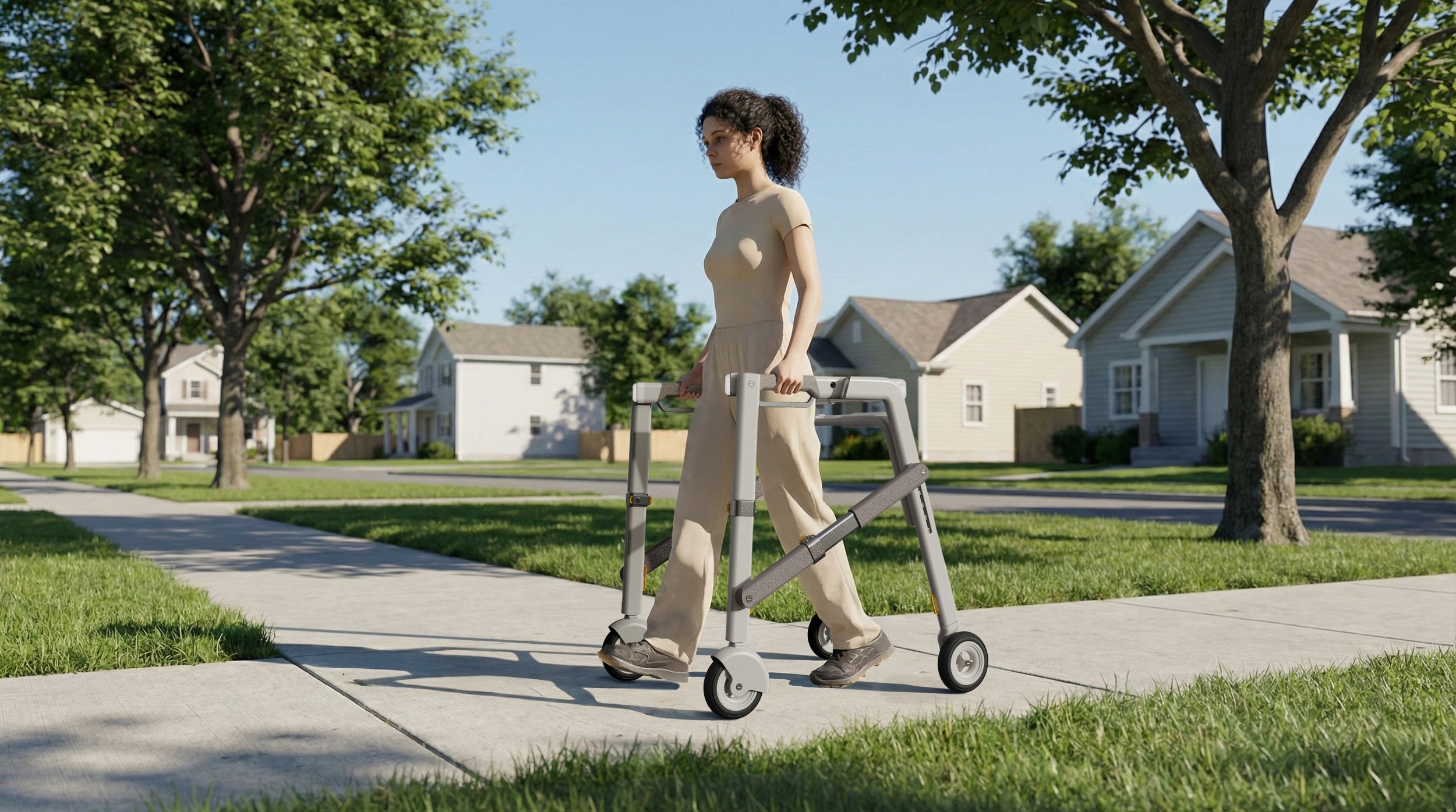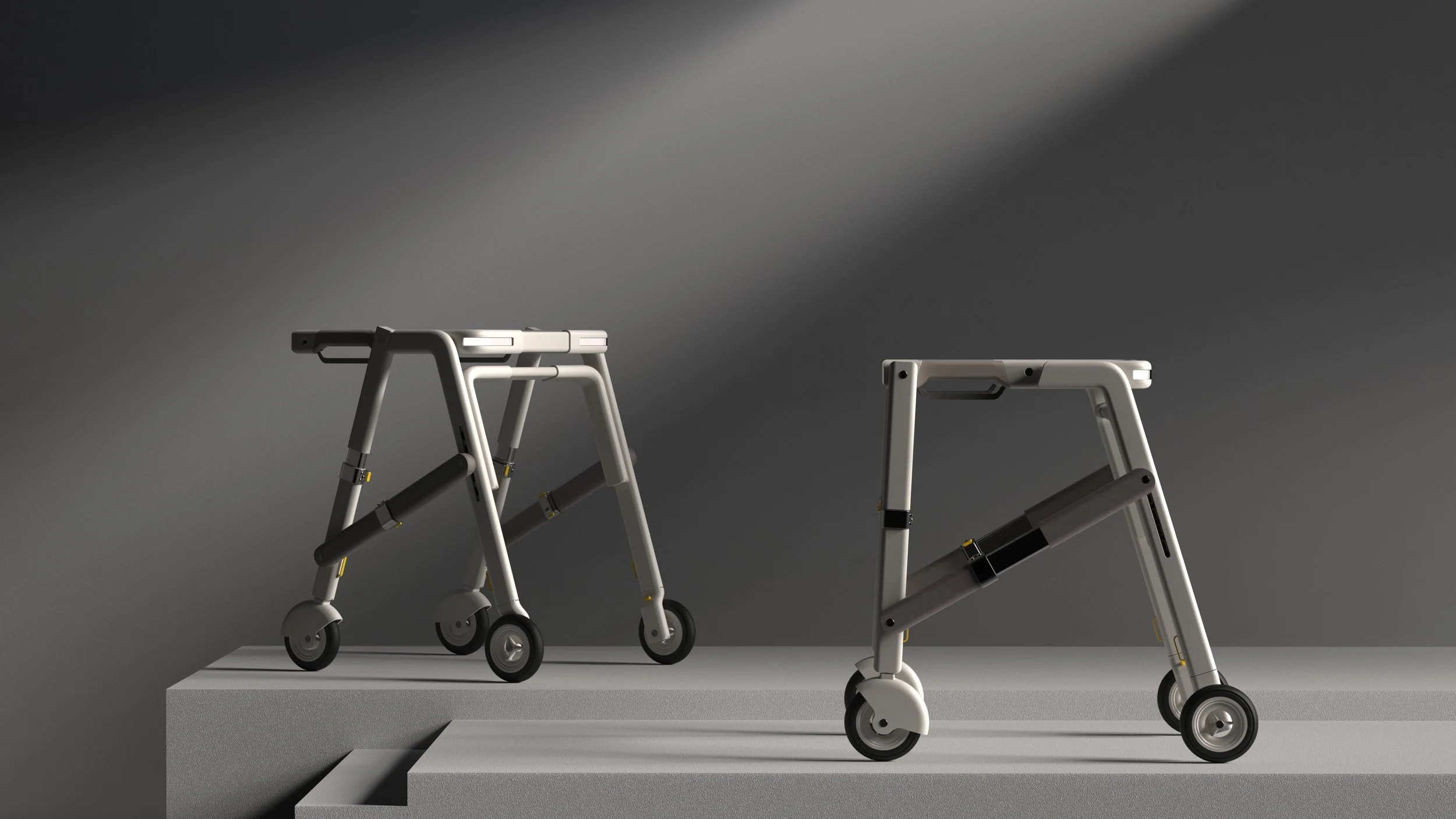
Assistive Walker Ver 2
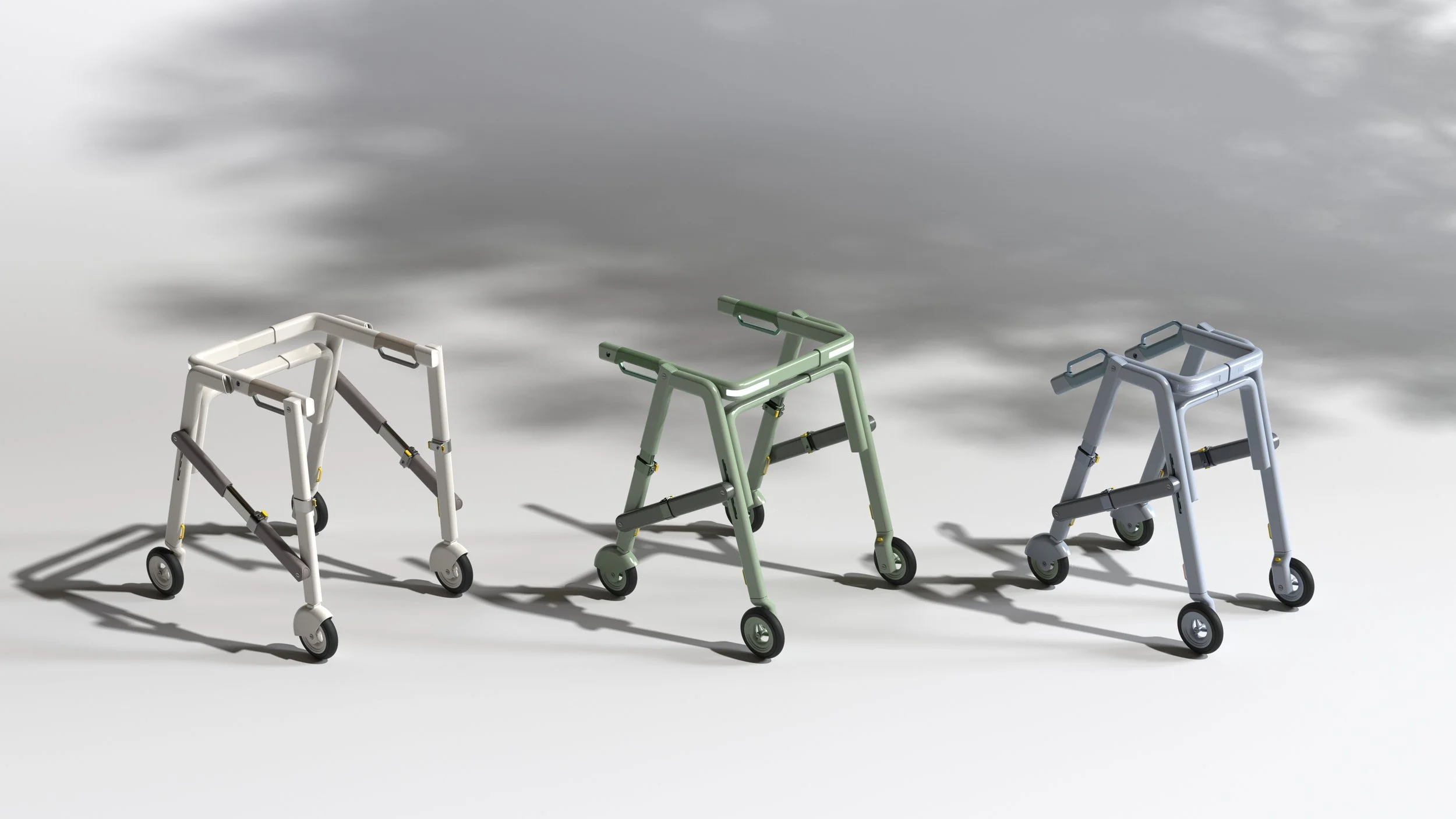
A versatile,multidirectional assistive walker

Problem Analysis:
Daily inconvenience of Managing Multiple Walkers
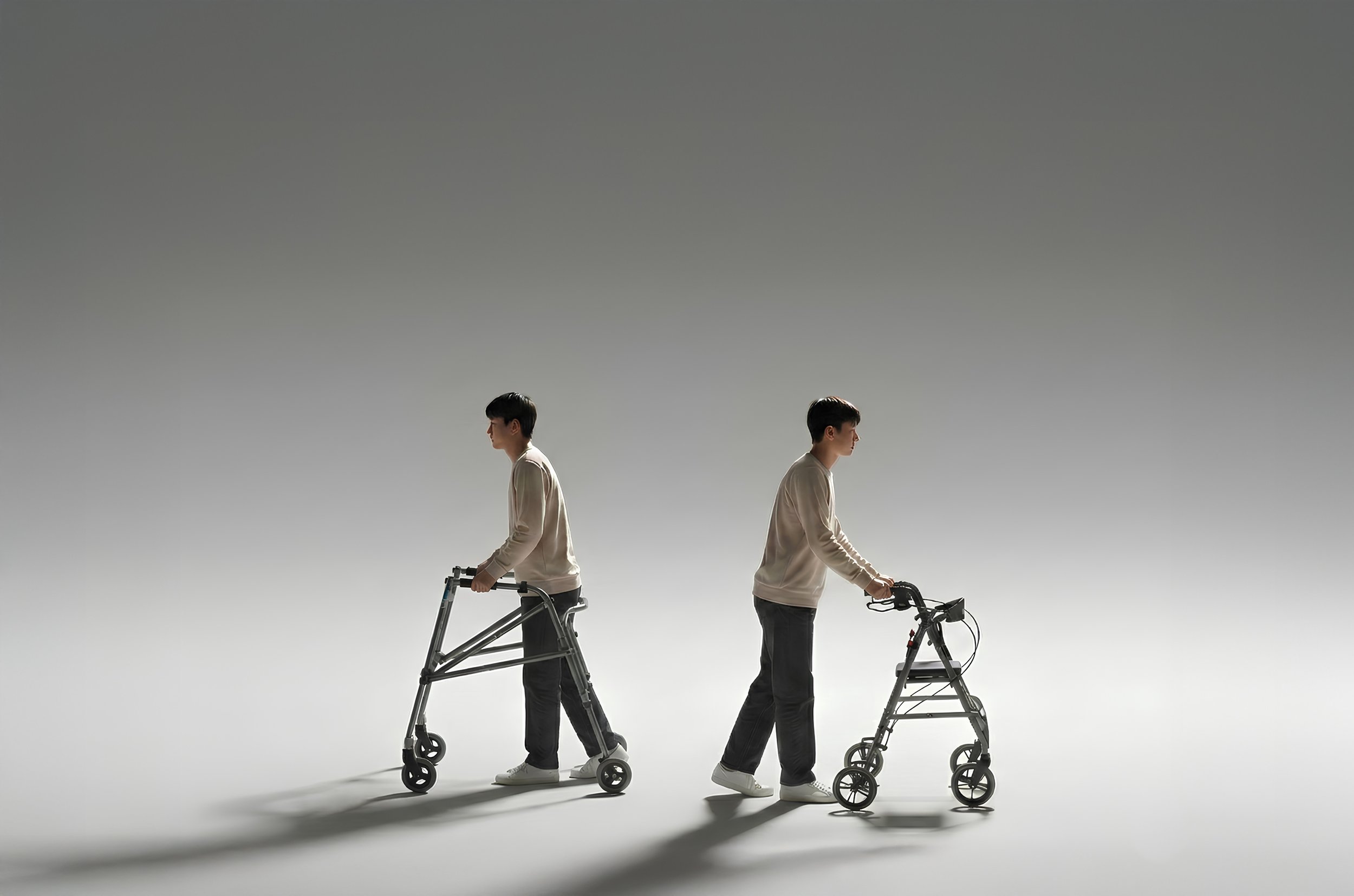
Based on my experience as an assistant teacher supporting a student with cerebral palsy and progressive neuromuscular paralysis, I observed how daily mobility needs fluctuate. My student DongHo used a rollator on better days and a posterior walker when muscle stiffness was severe. Managing multiple walkers created a clear daily inconvenience for children and young adults with similar conditions, highlighting the need for a more adaptable mobility solution.
Driven by curiosity and built on purpose, this is where bold thinking meets thoughtful execution. Let’s create something meaningful together.
My Solution: A multi-directional walker
Although cerebral palsy is a lifelong condition, its effects such as movement challenges and spasticity are managed through ongoing therapy, medication, and support to improve function and independence.
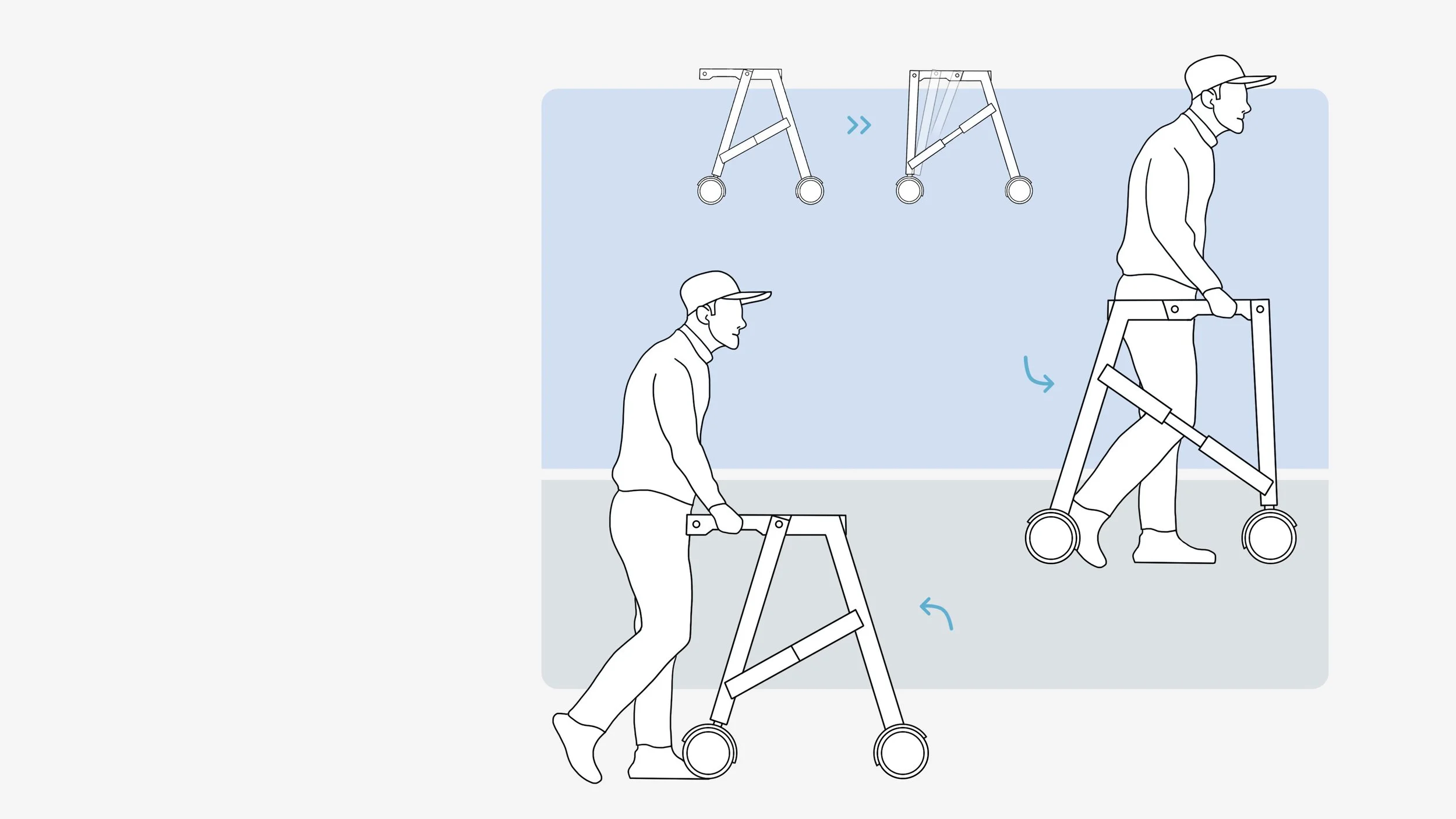
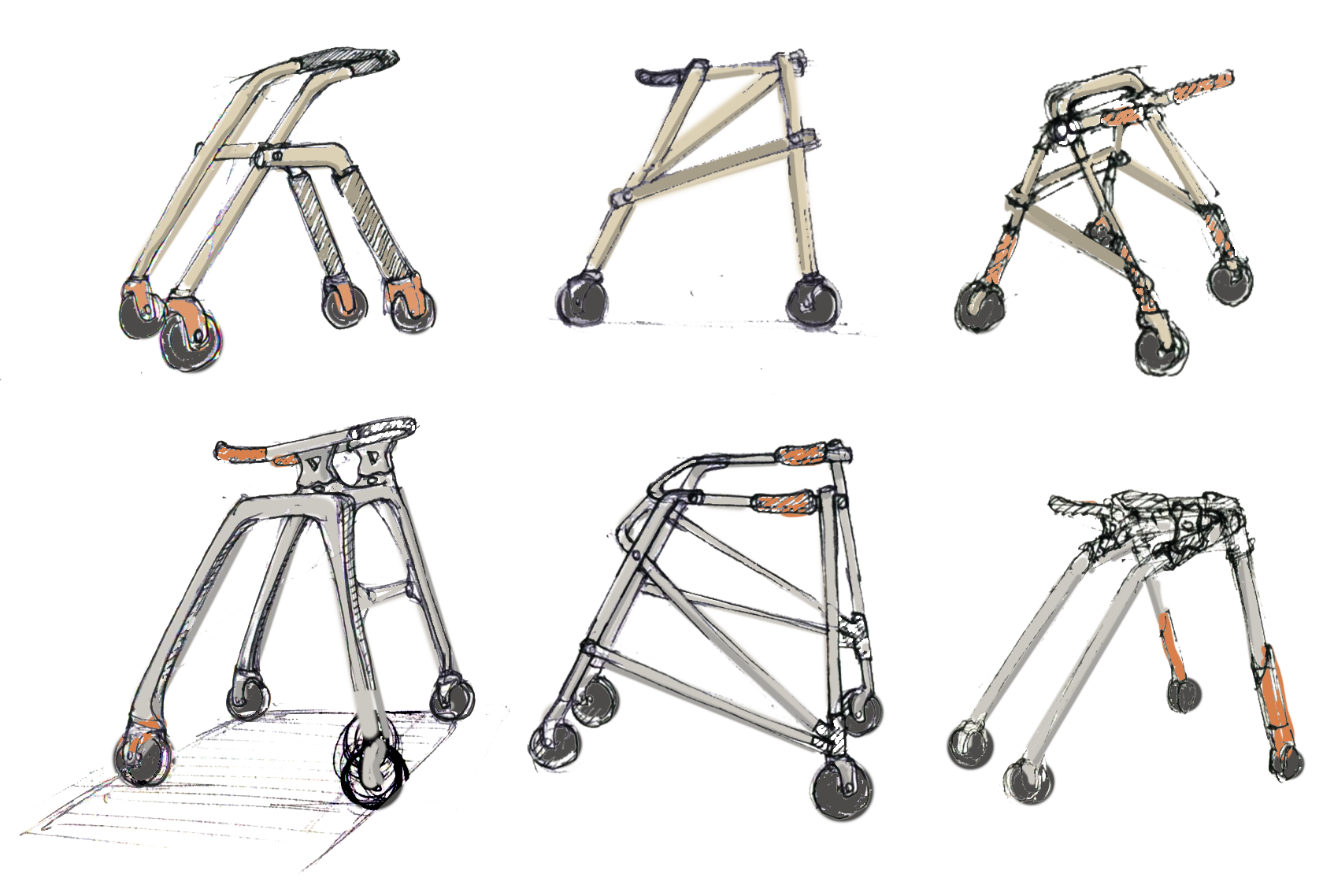
This project addresses this need by designing a single walker that transforms between posterior and rollator modes based on the user’s needs.
Posterior Walker Mode
For postural support and gait alignment. Encourages upright walking and is often used for regular mobility and structured gait training.
Rollator Mode
For users with better balance and trunk control. Preferred for longer distances, energy conservation, and rehabilitation or community use.
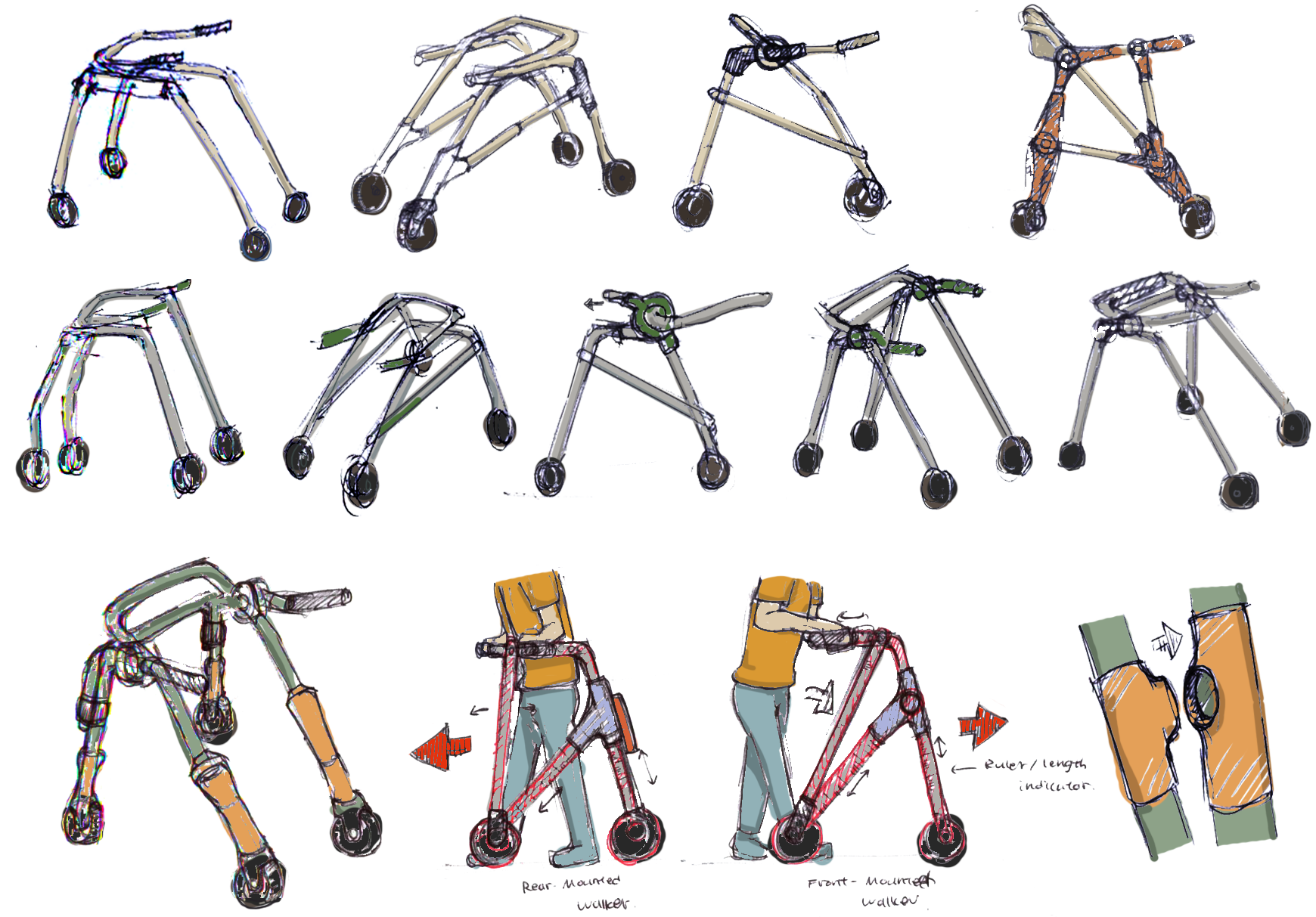
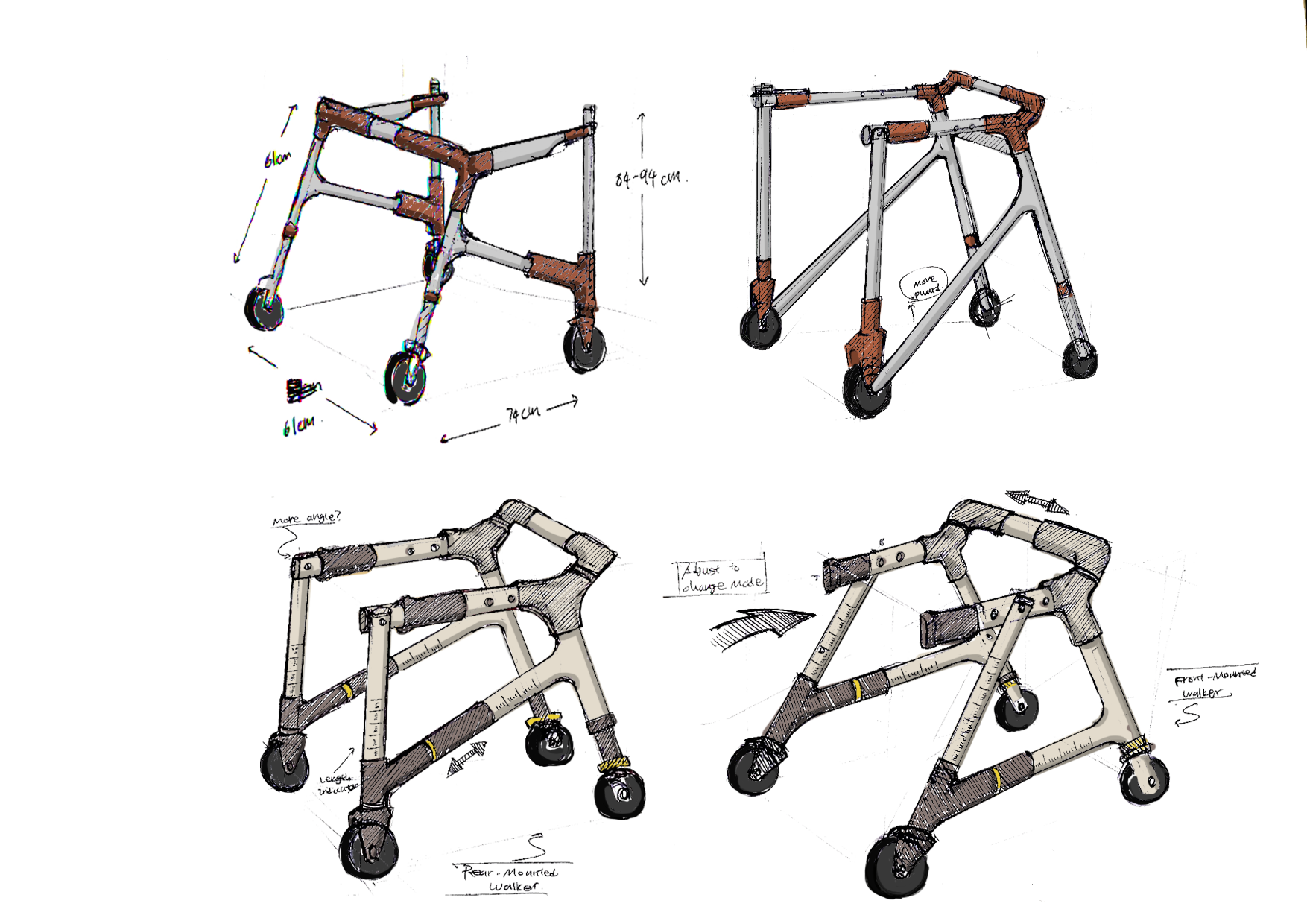
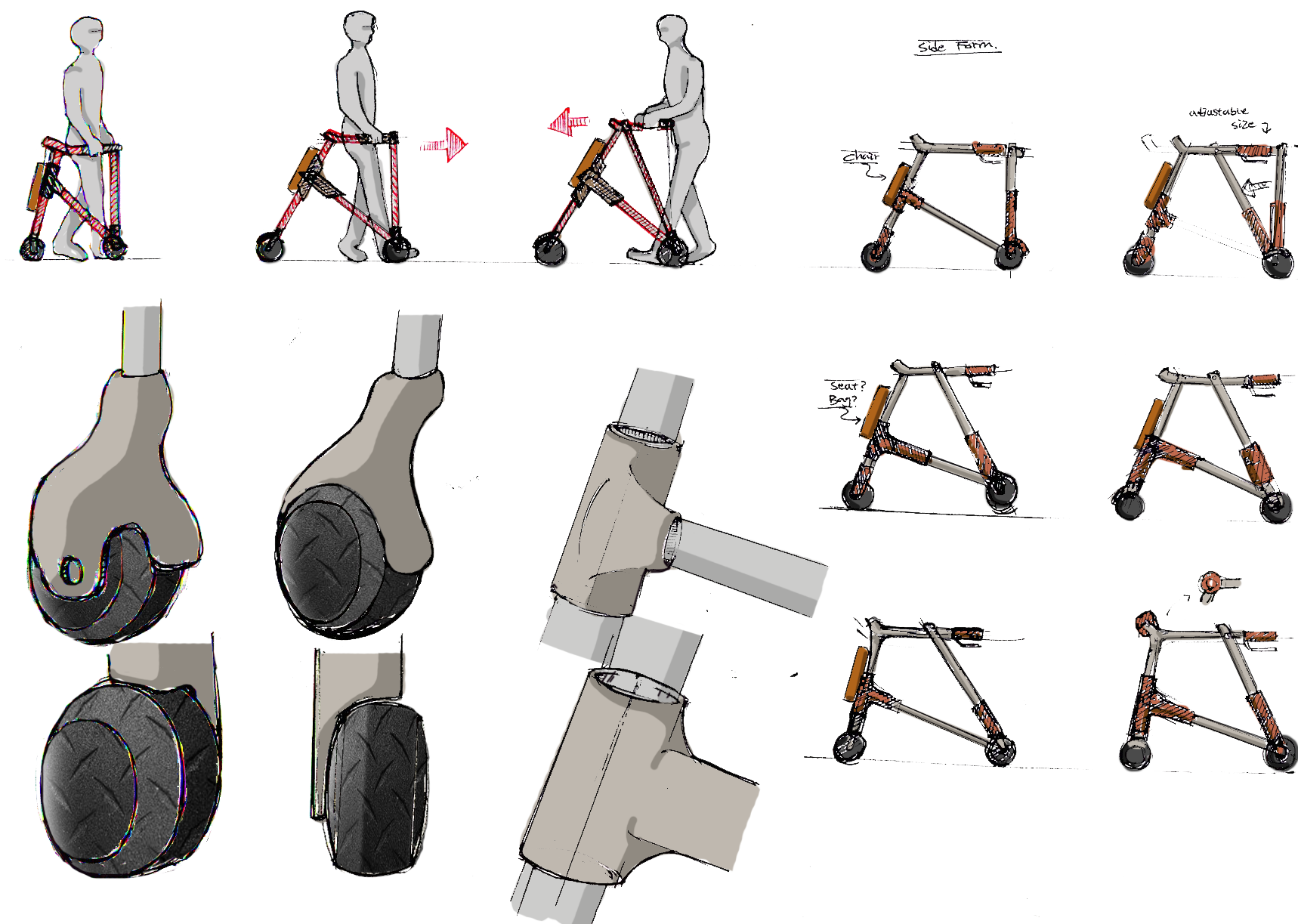
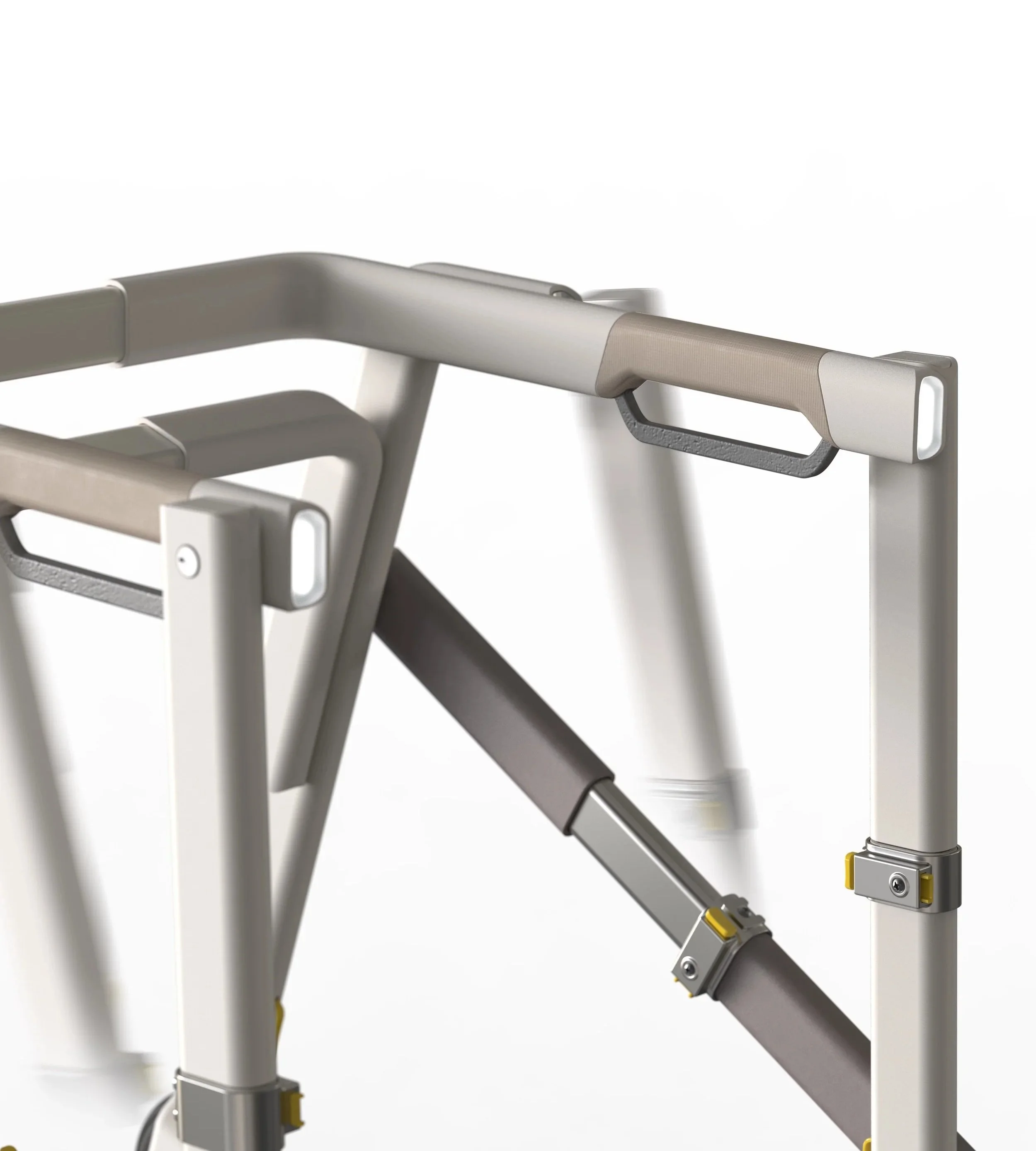
Switching Modes: Rollator to Posterior walker
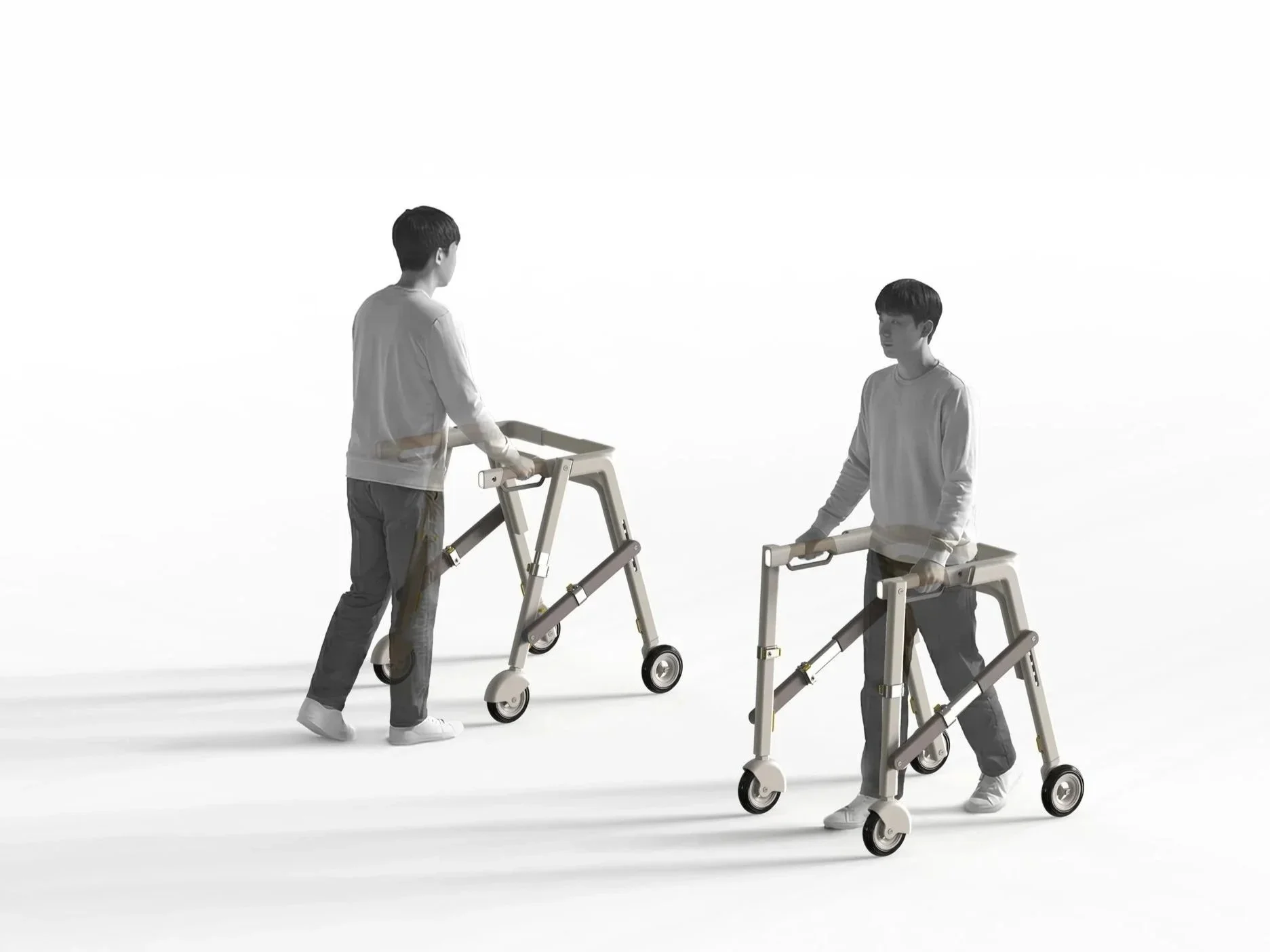
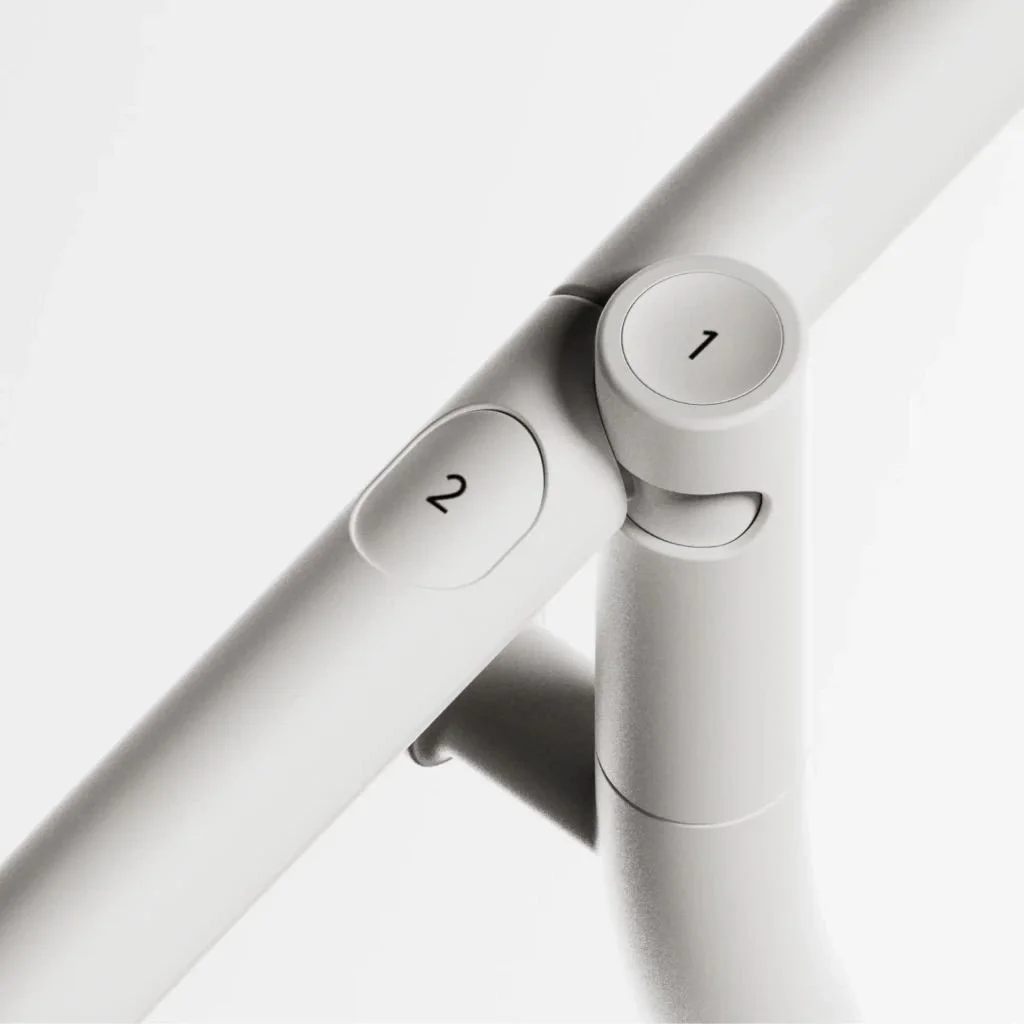
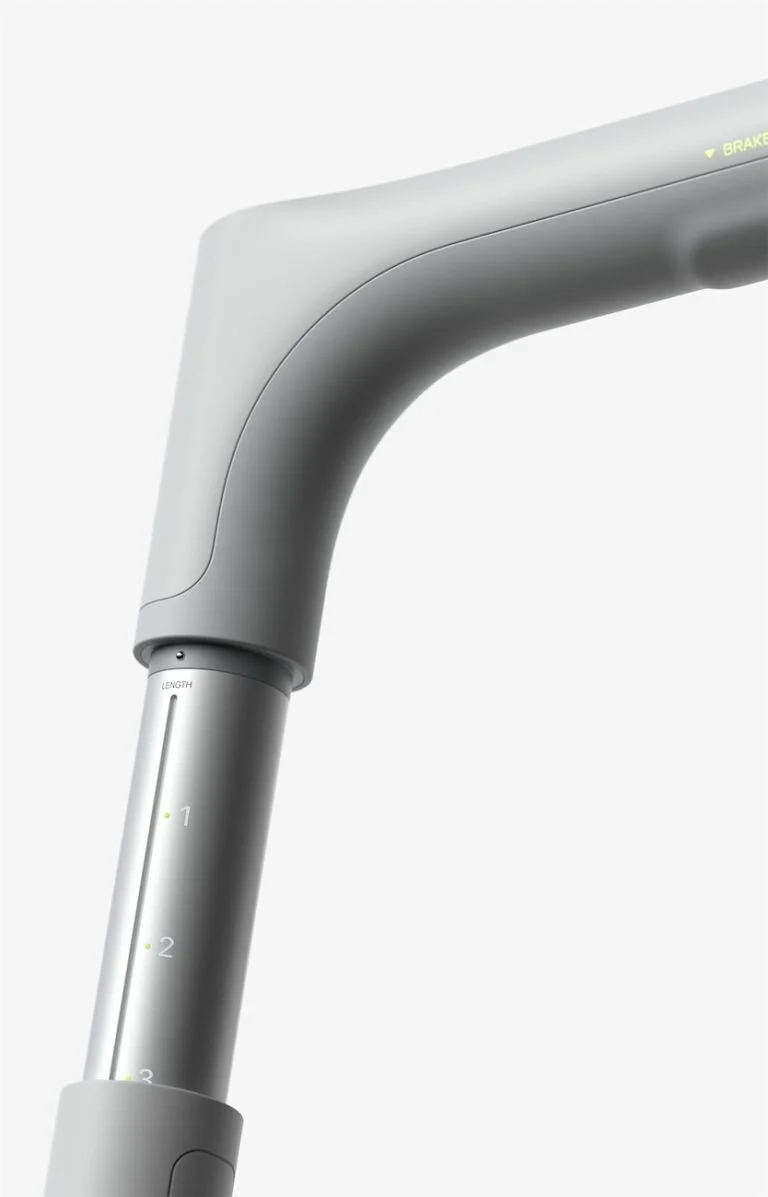
The walker switches between rollator and posterior modes via adjustable front leg. Integrated LEDs at each end of the frame improve visibility in low-light conditions.
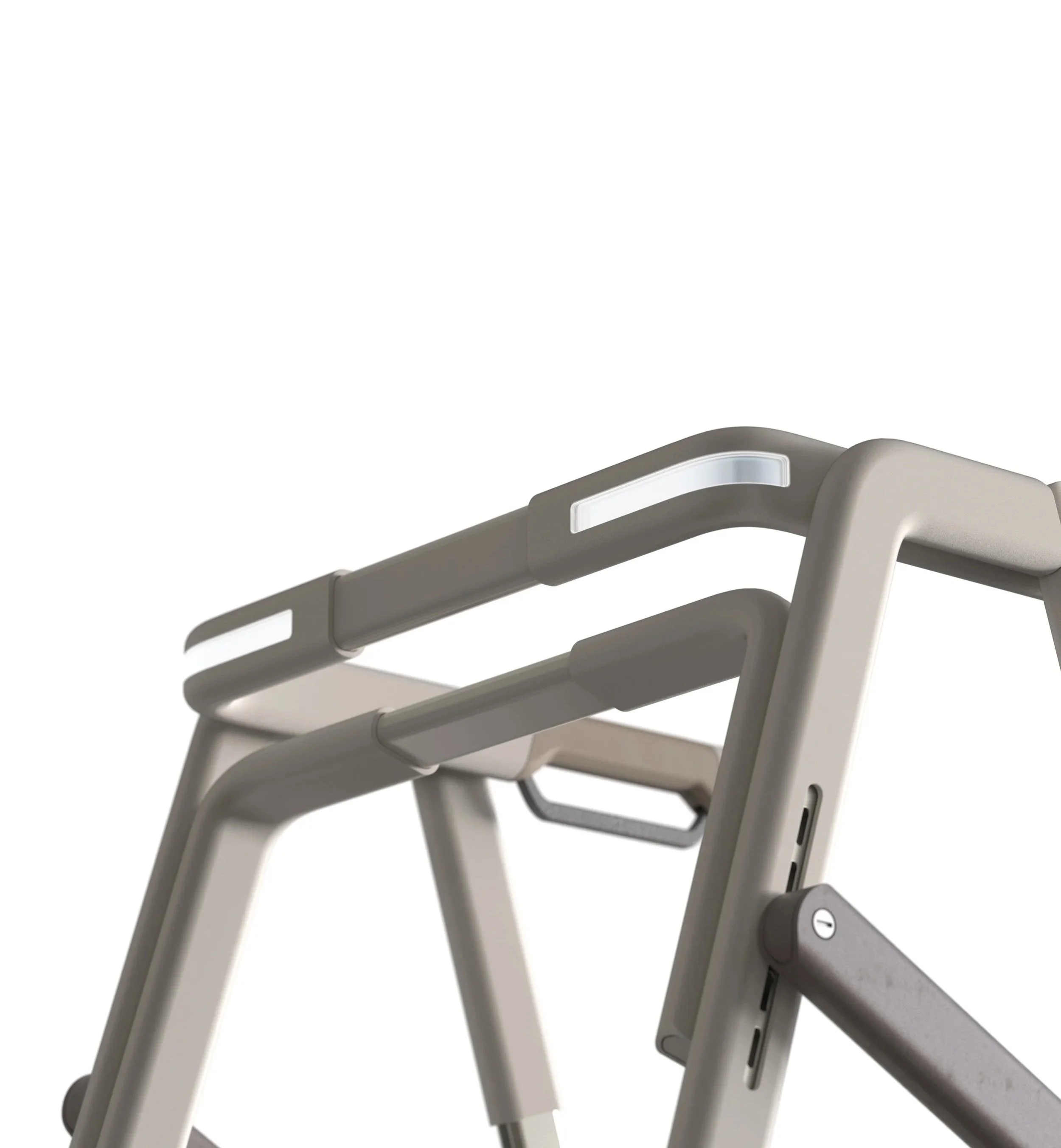
Integrated LEDs for low-light environments.
The LEDs are included to improve user safety in low-light conditions.
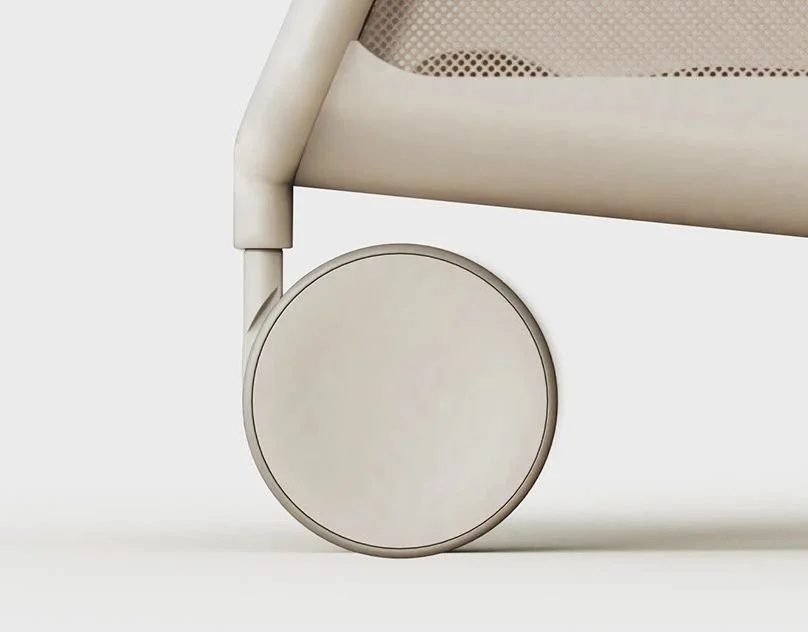
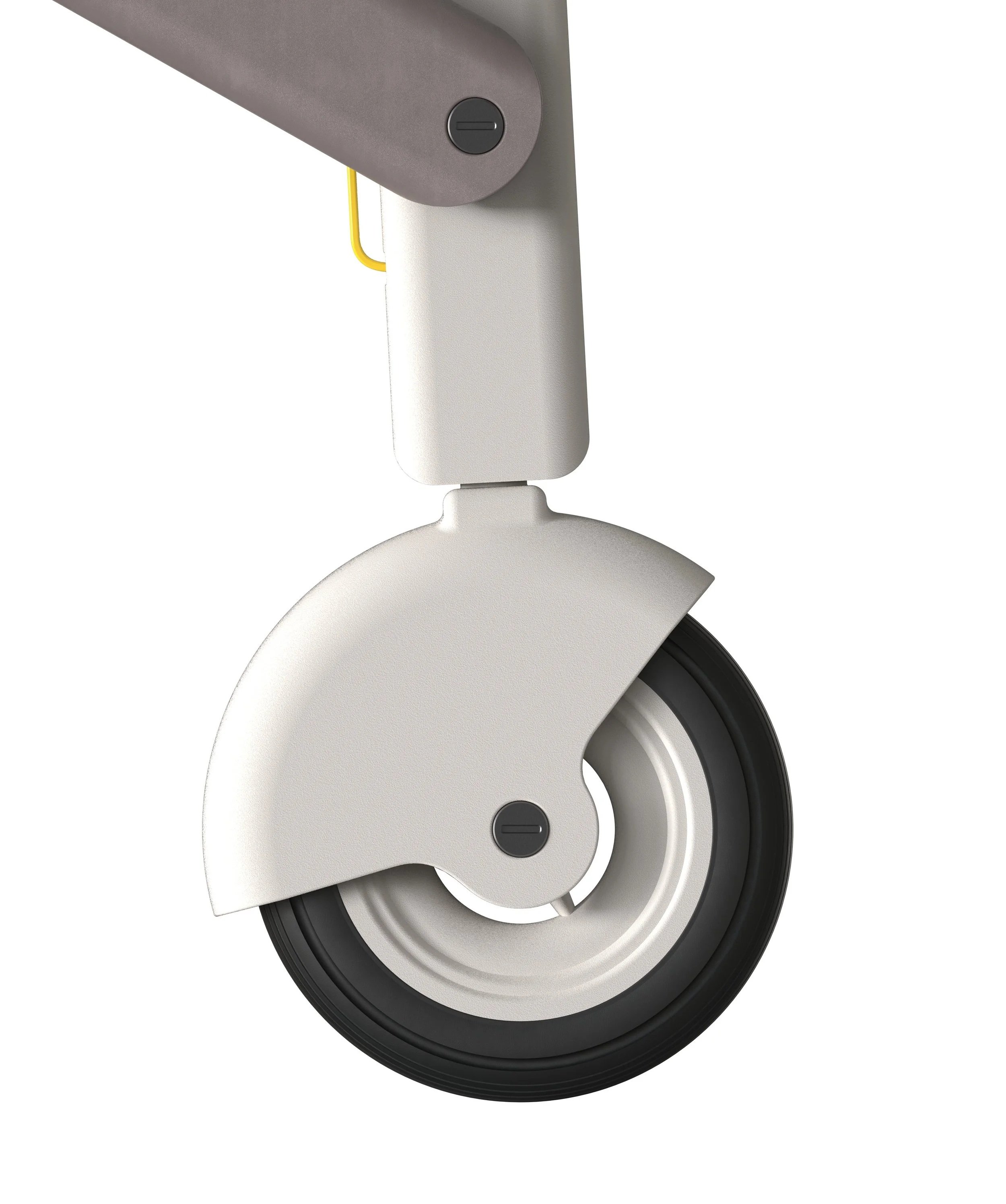
A wheel cover designed for maximum resistance to pressure and stress on the wheel.