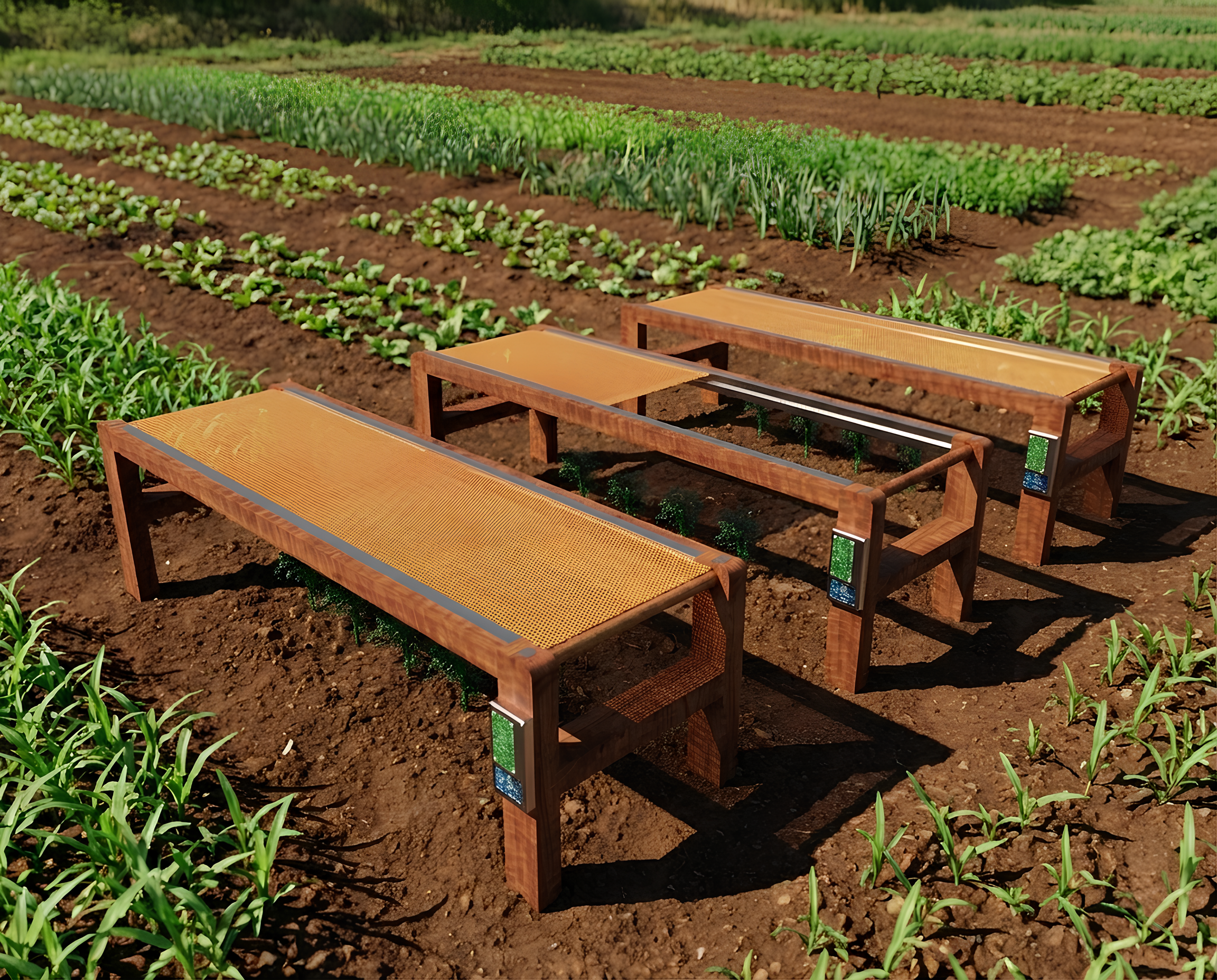
Automated agricultural netting
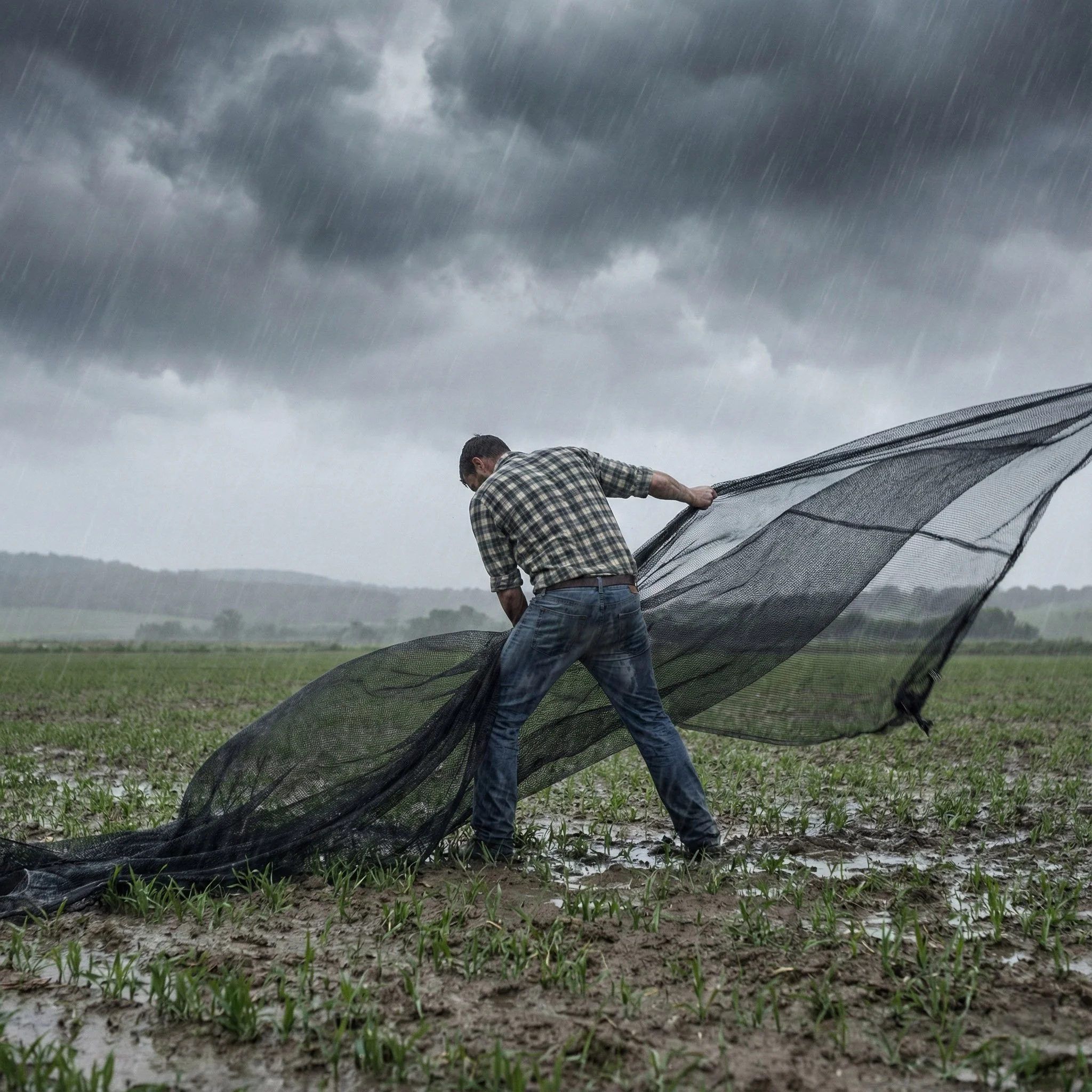
Problem: Agricultural nets are installed on small crops for the protection from storms, pests from the air and extreme sunlight. But the process of installing and withdrawing the net is very labor intensive.
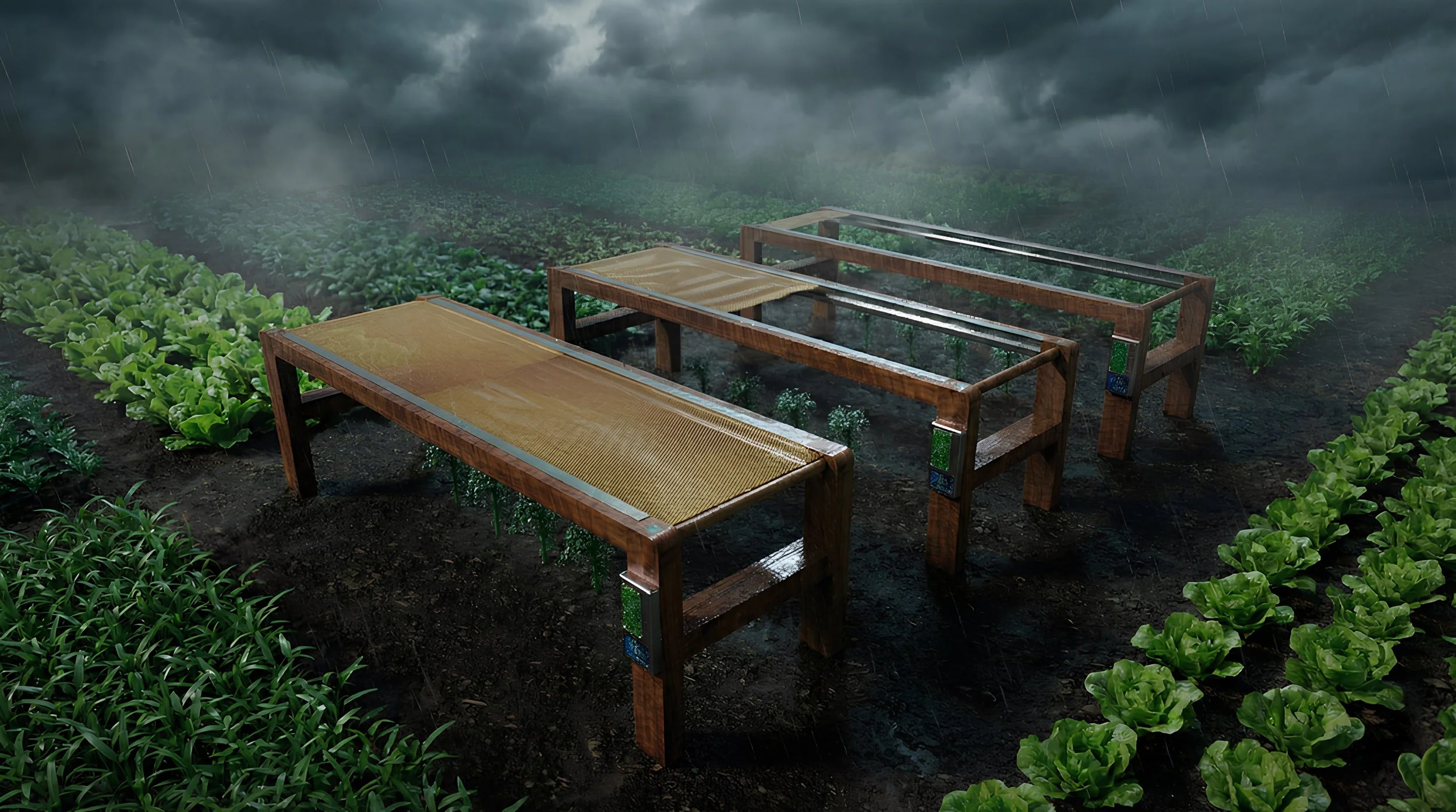
Solution: Automating the netting system could reduce significant amount of human labor. By installing sensors that automatically deploys the net over the crop when sensing the potential danger, it would lift the burden off the farmers.
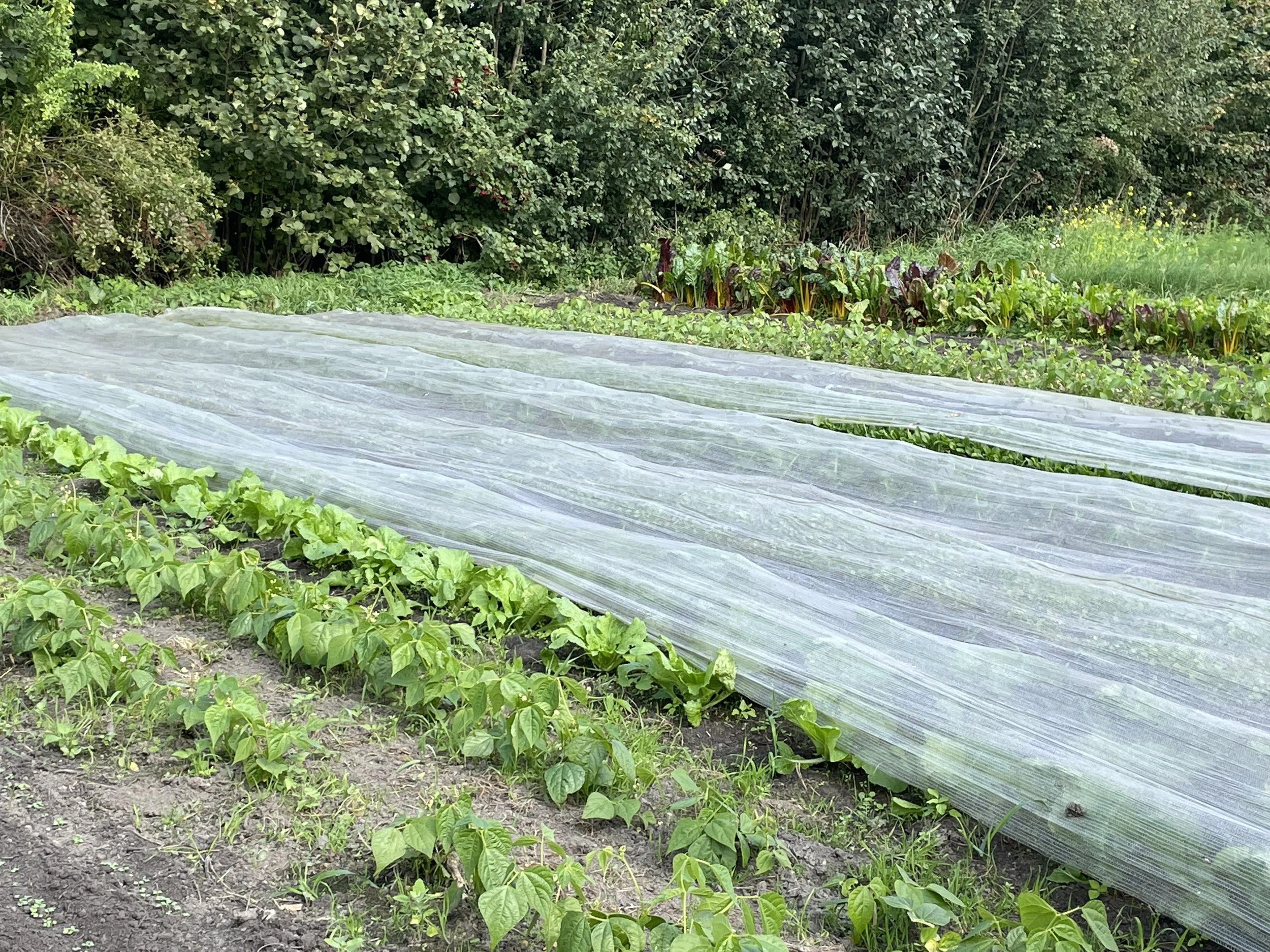
Field-Based Insight
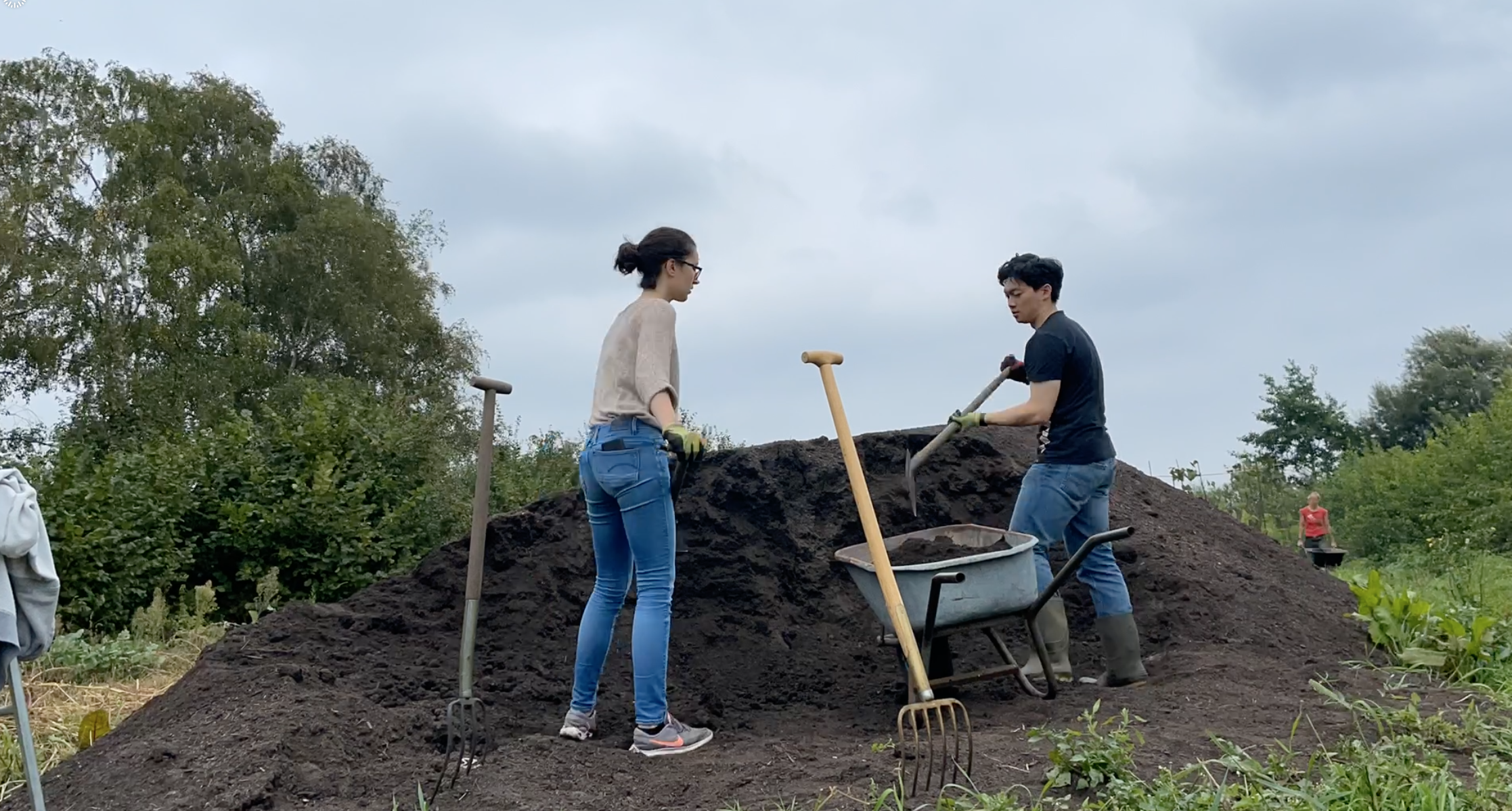
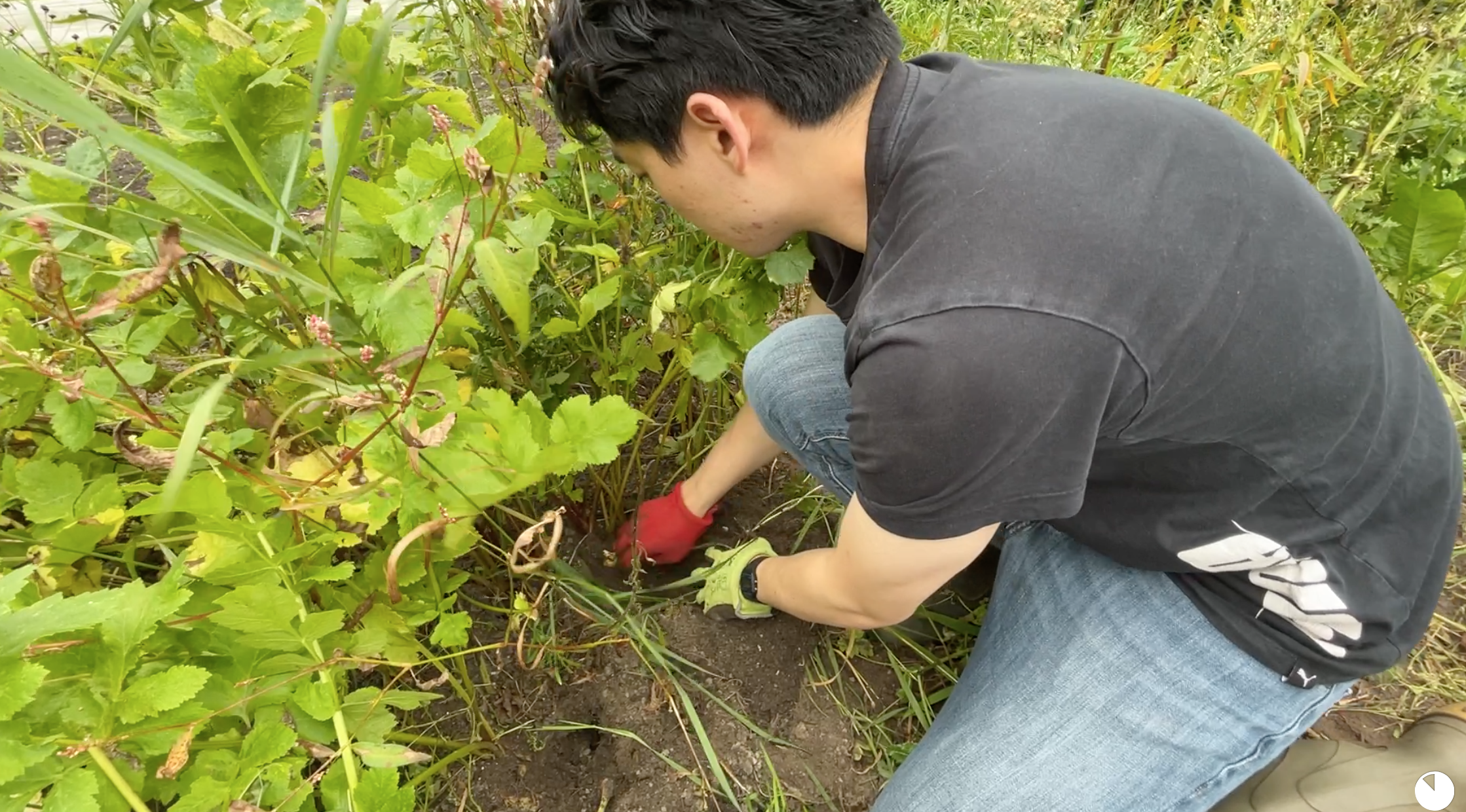
Through field research at the Low-tech Campus Farm in Oirschot, Netherlands, I worked alongside local farmers and directly experienced the physical demands of low-tech agriculture. Interviews and hands-on work revealed that manual net deployment is a major labor-intensive pain point across farms of all scales.
This process leaves young crops vulnerable to harsh weather, pests, and harsh sunlight, highlighting the need for an automated system that improves efficiency, protects crops, and reduces physical strain on farmers.
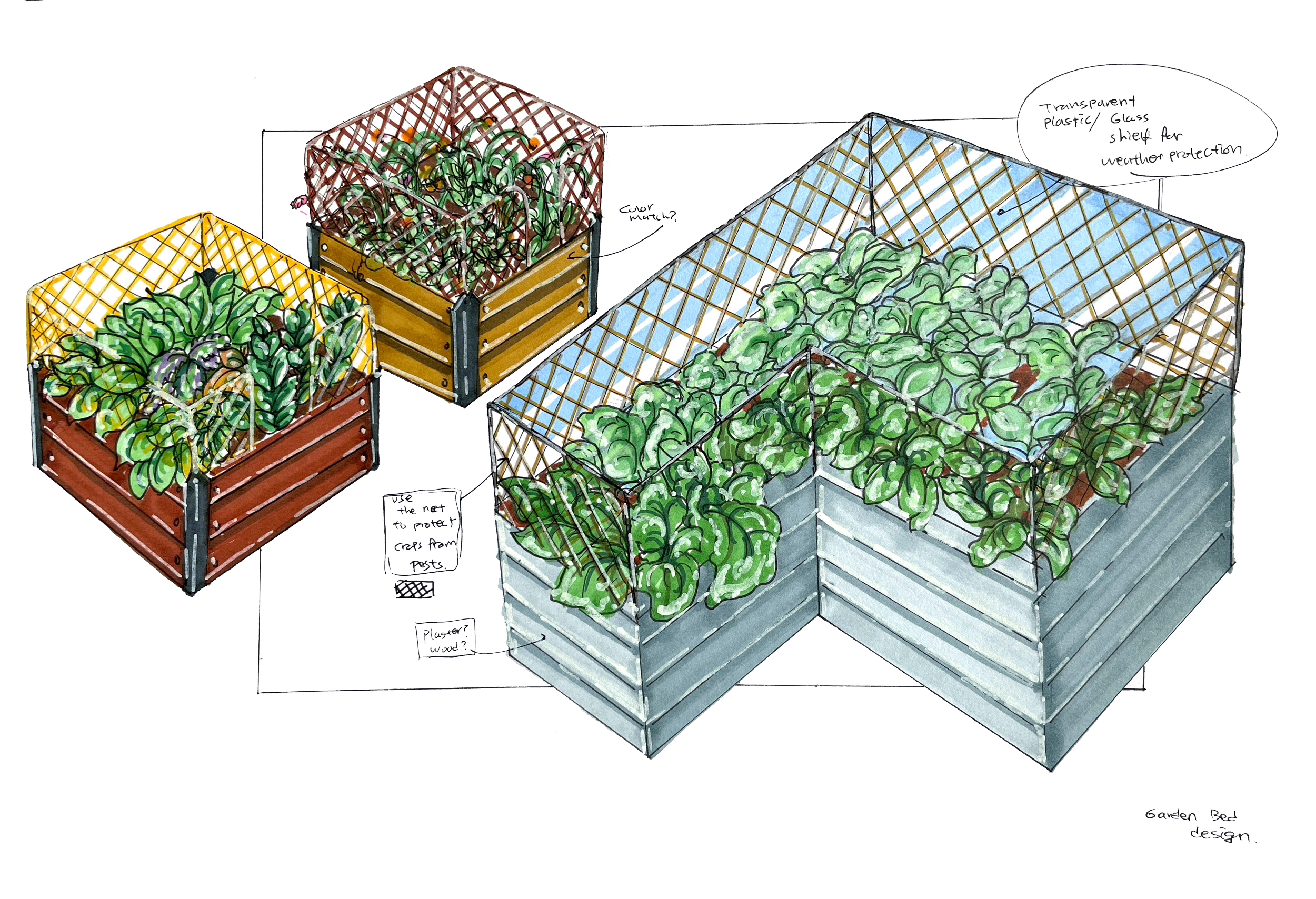
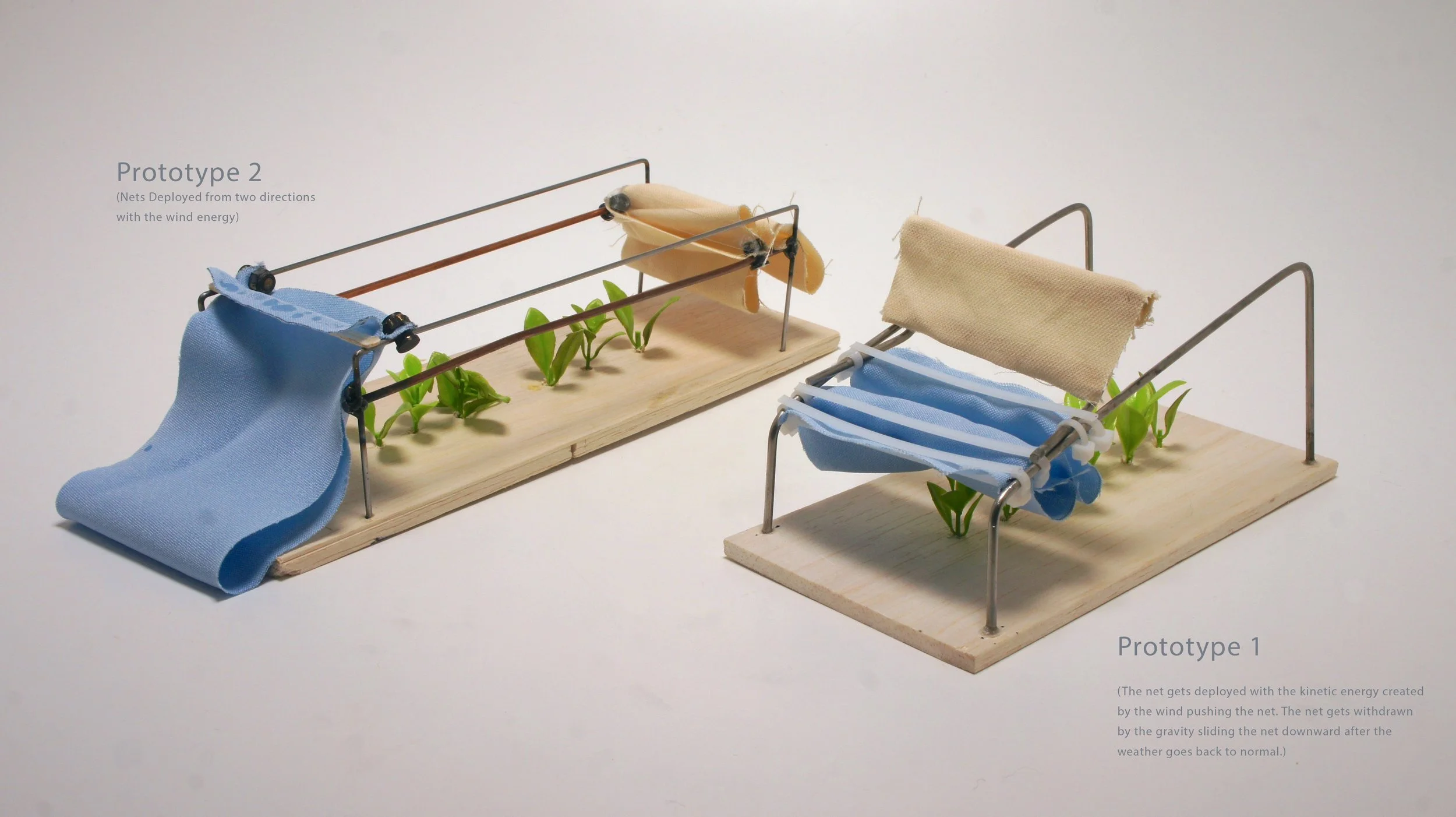
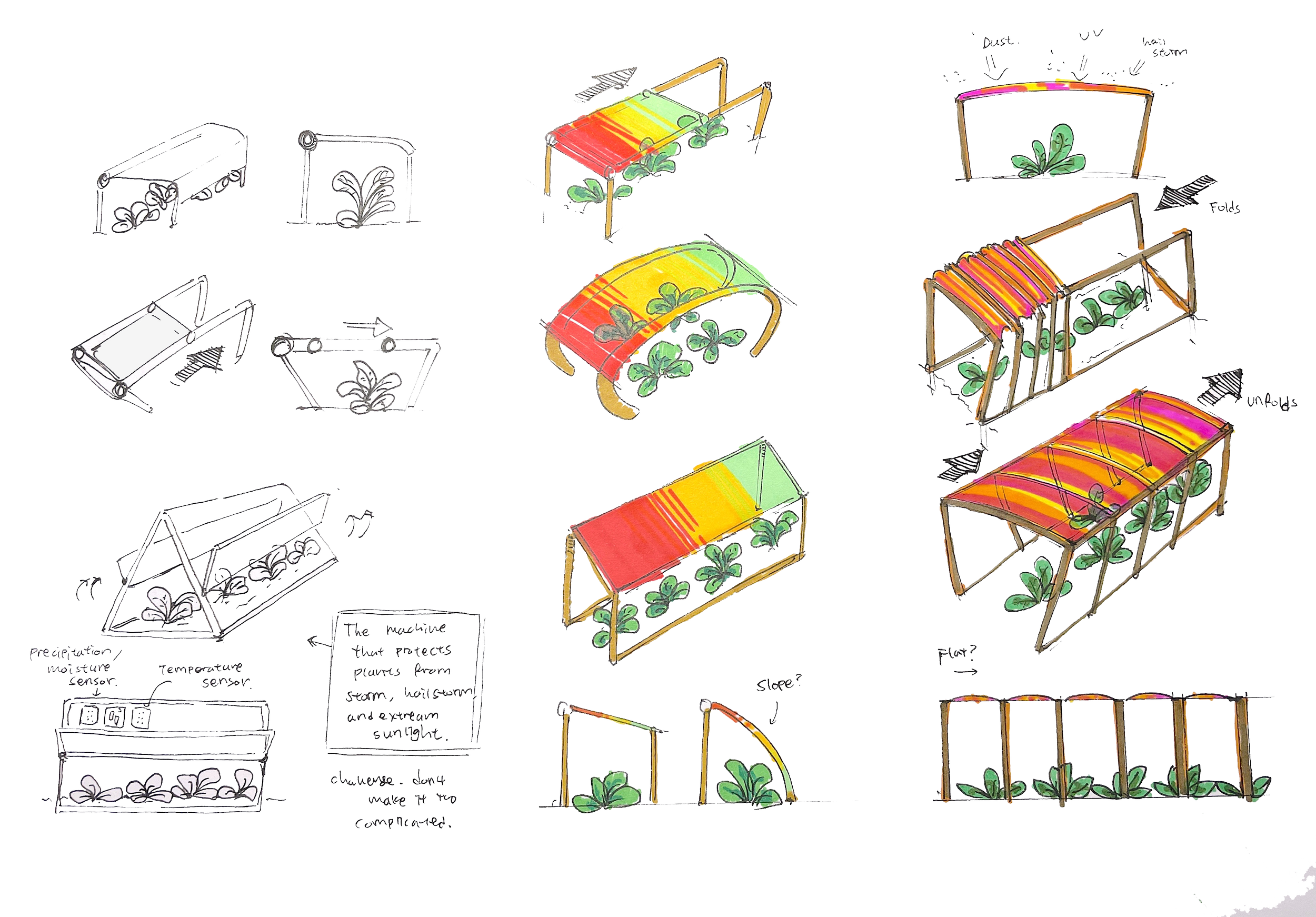
Video
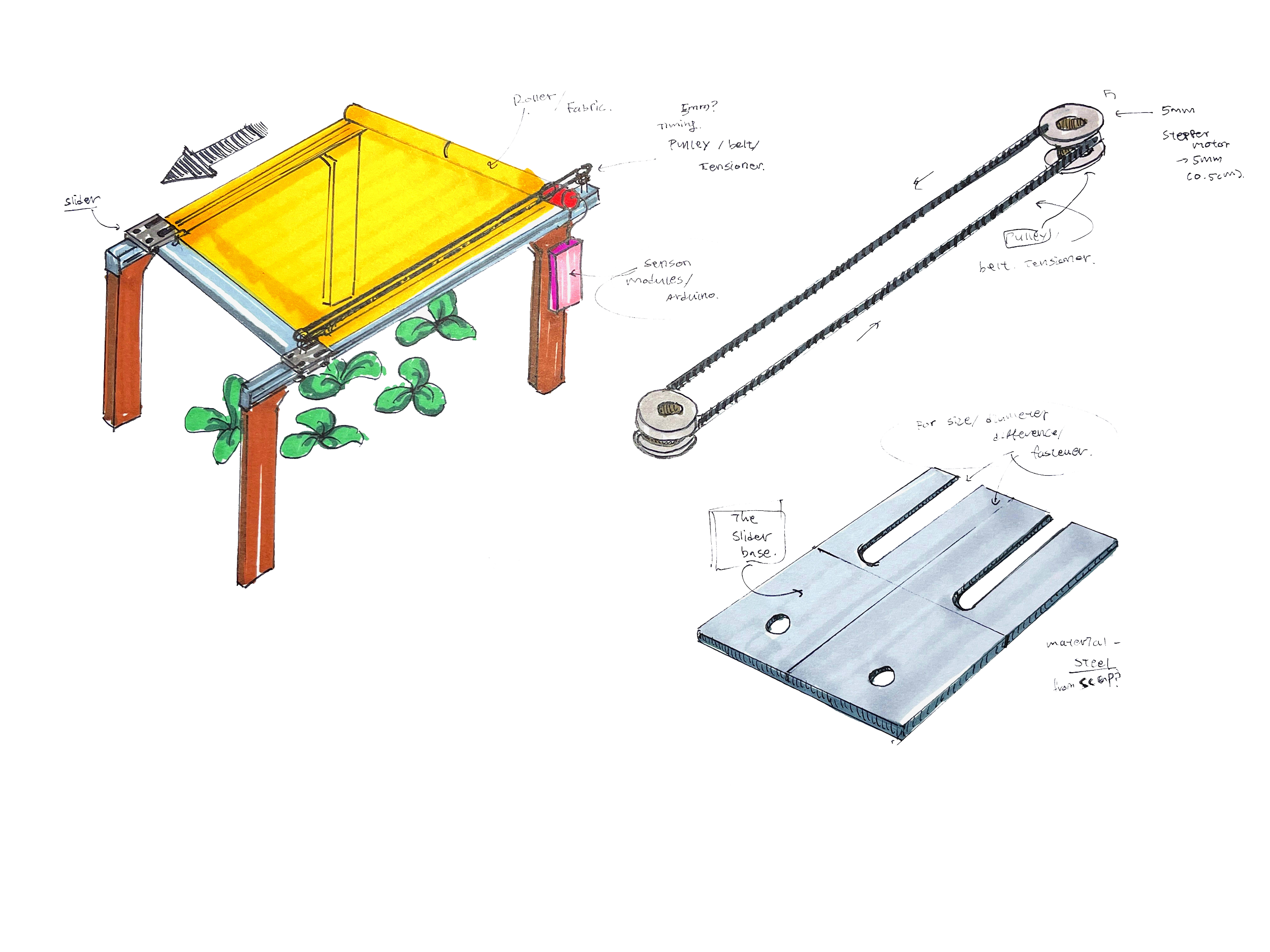
Technical solution analysis
Designing an automated machine that uses weather forecasts to deploy protective netting the night before a storm.
By removing the labor-intensive work of manual setup, this system ensures young sprouts are safe while allowing farmers to worry less.
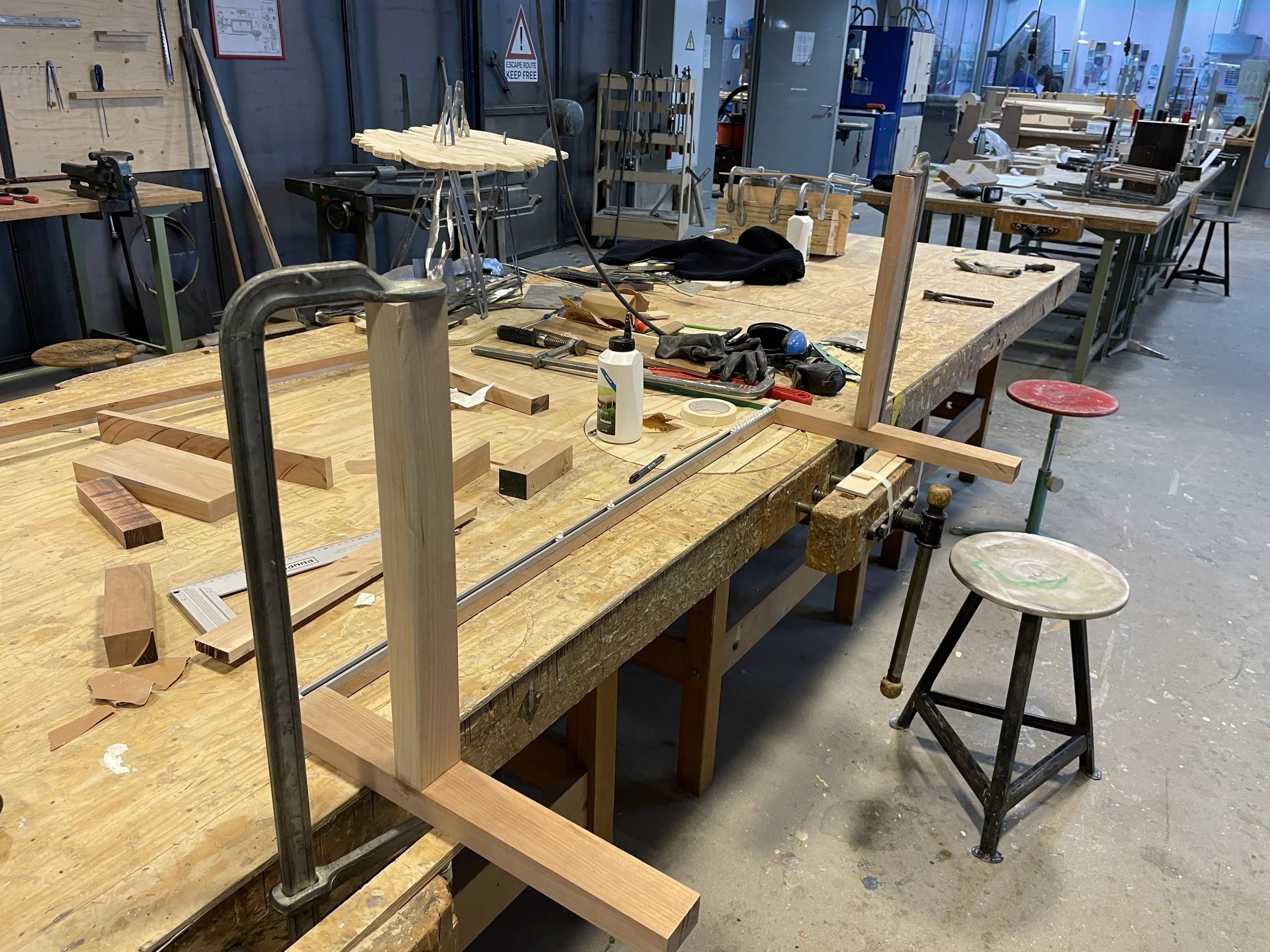
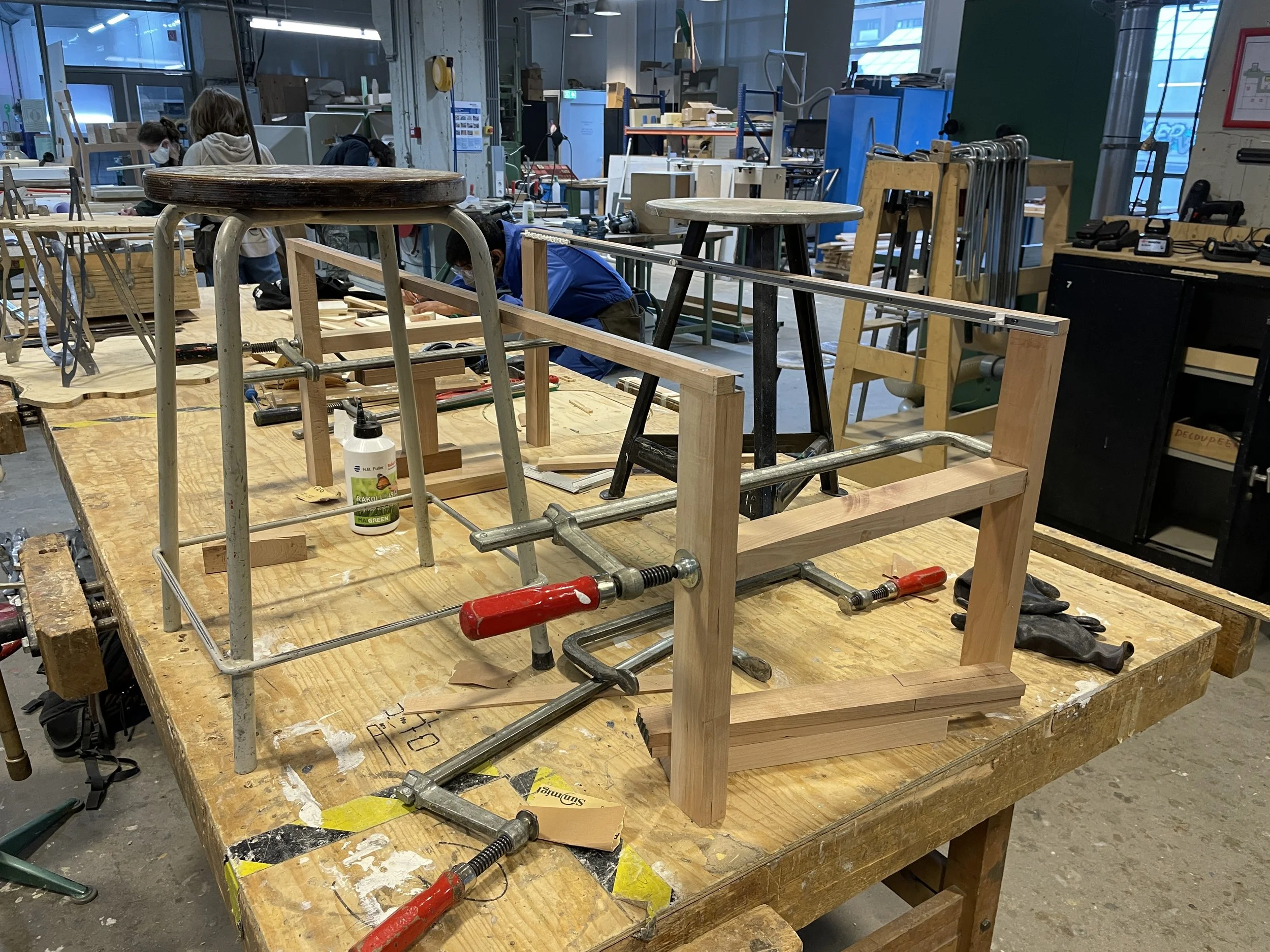
Making real-life scale model + Integrating electronics
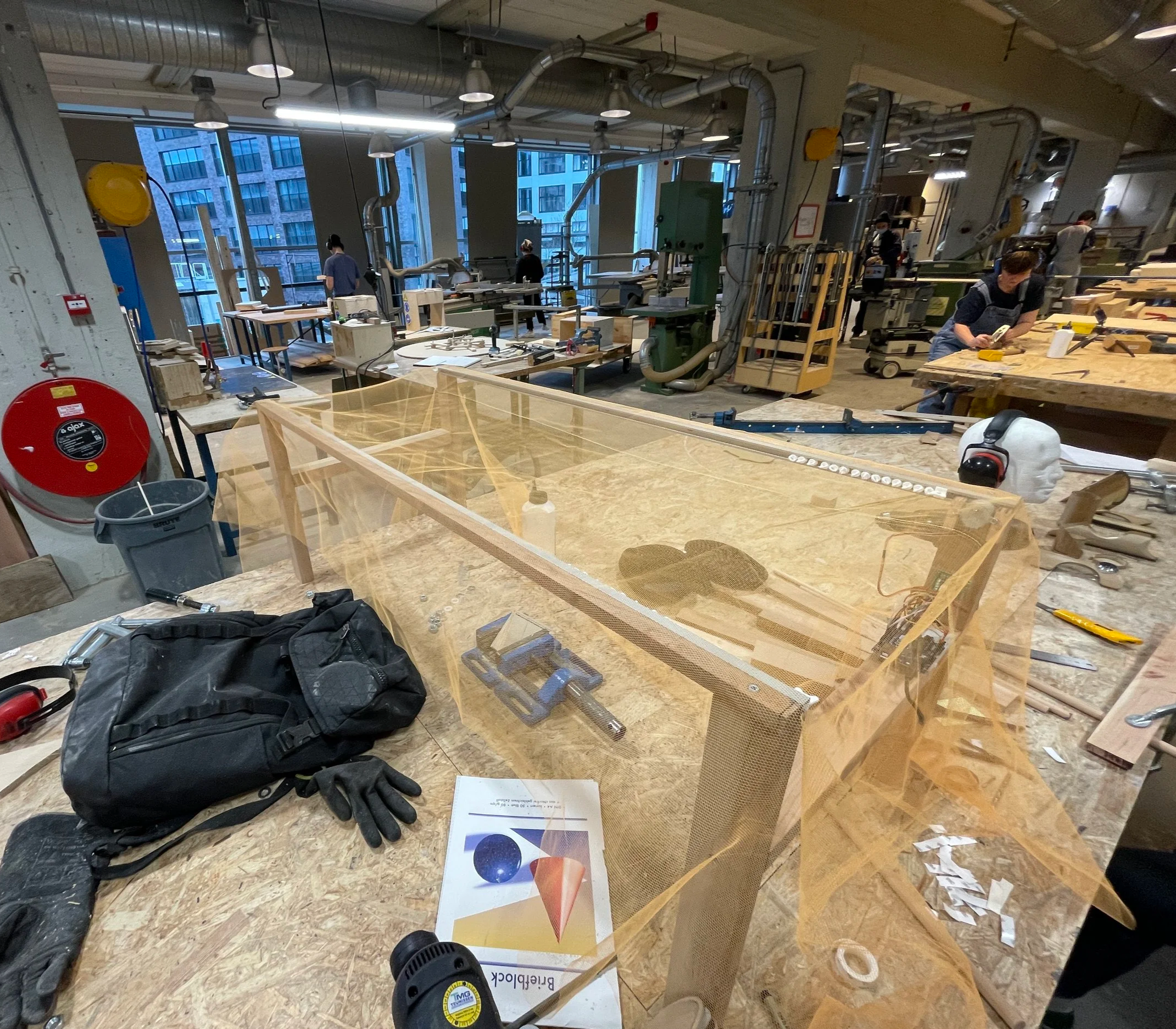
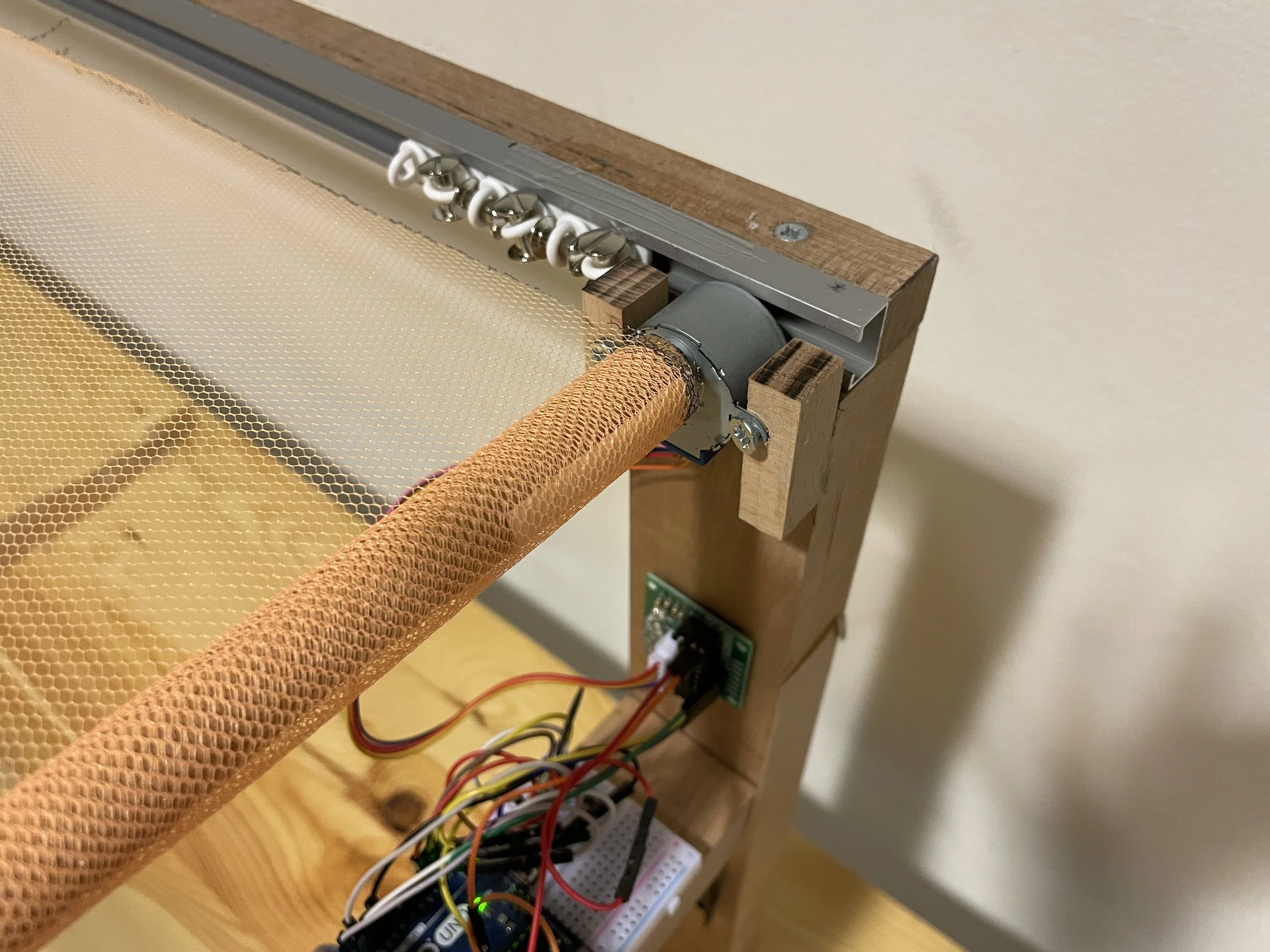
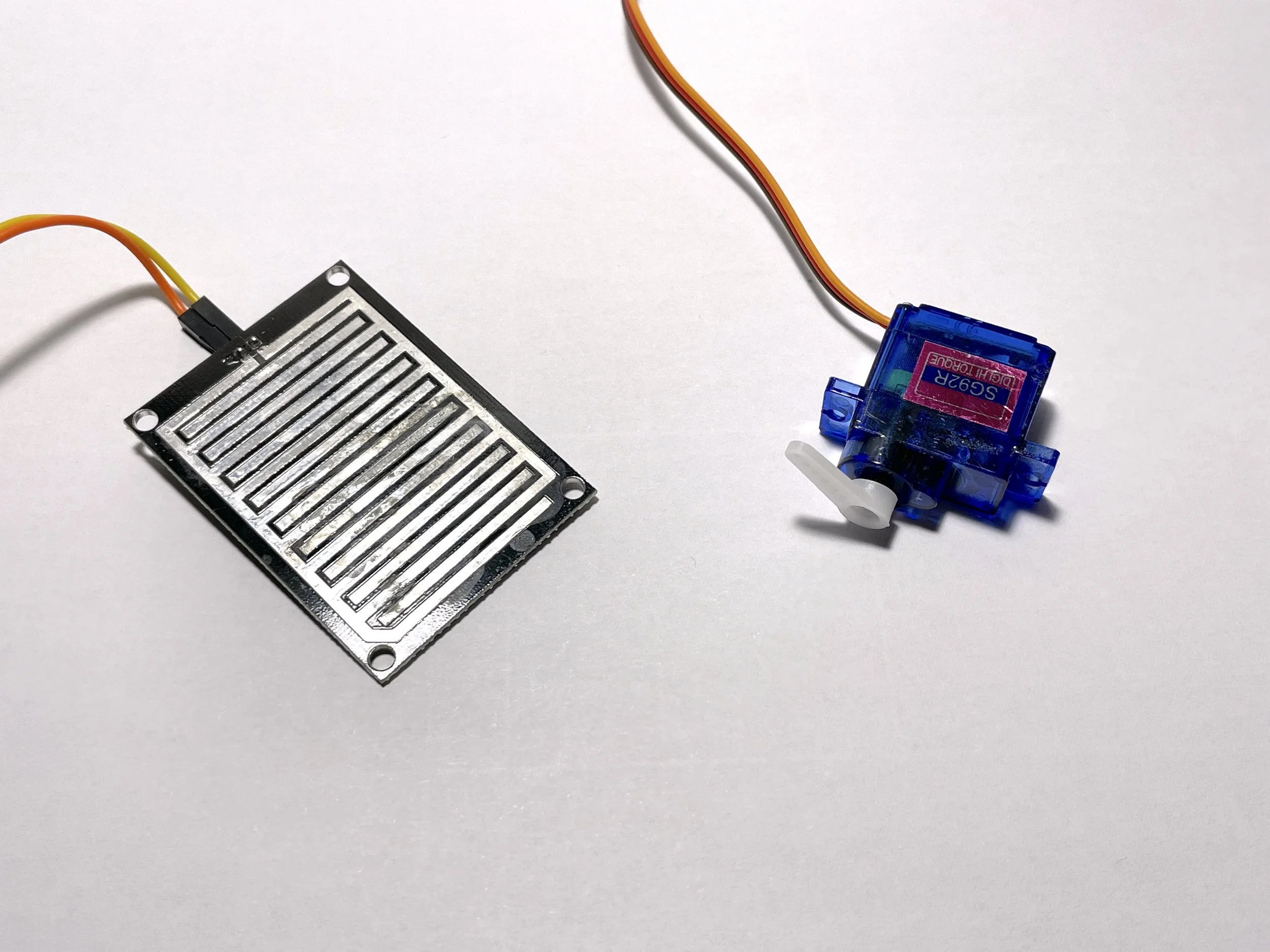
Real-world scale model constructed from cherry wood, nylon net, metal sliders, motors, a liquid sensor, and a temperature sensor.
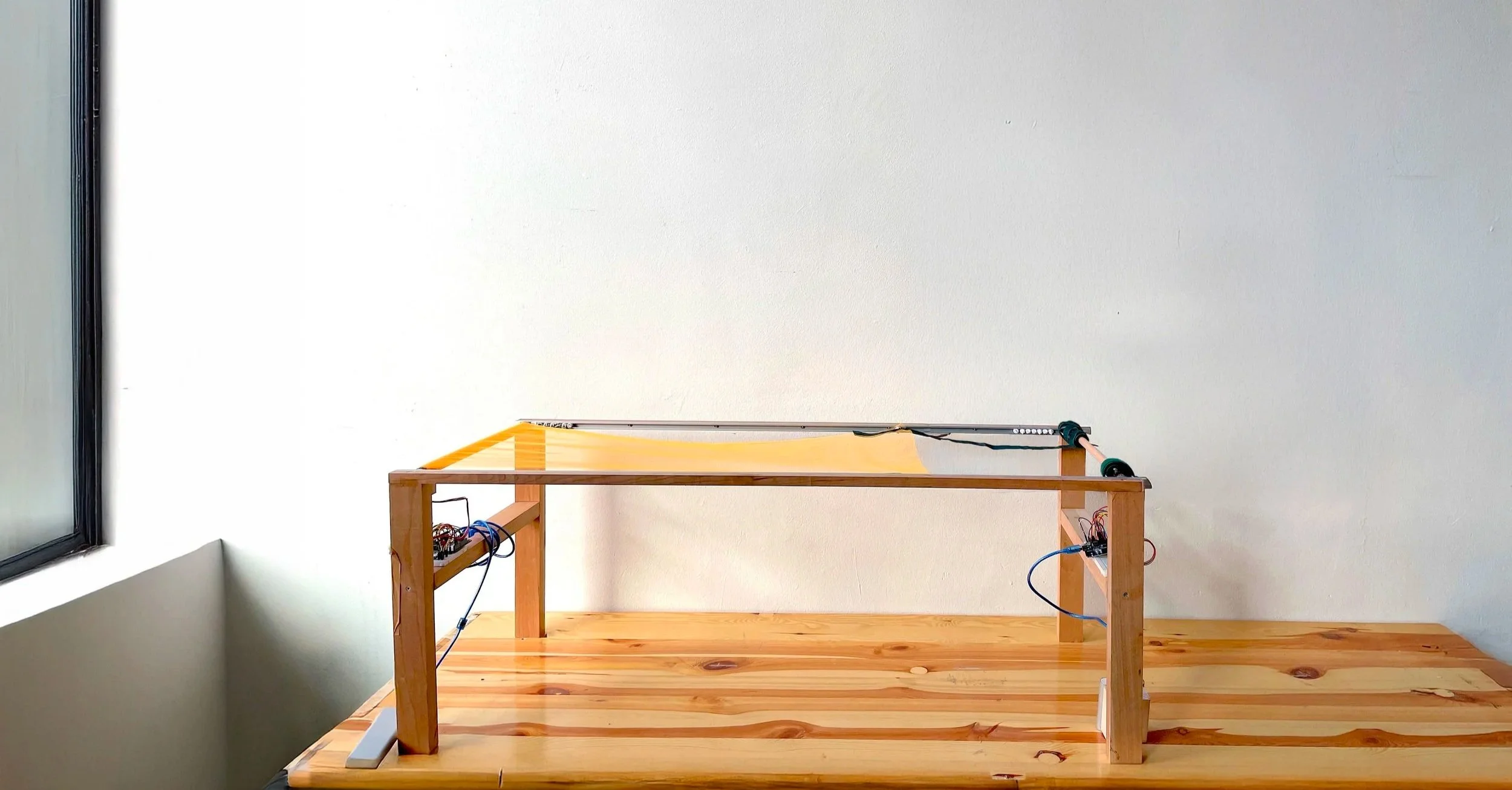
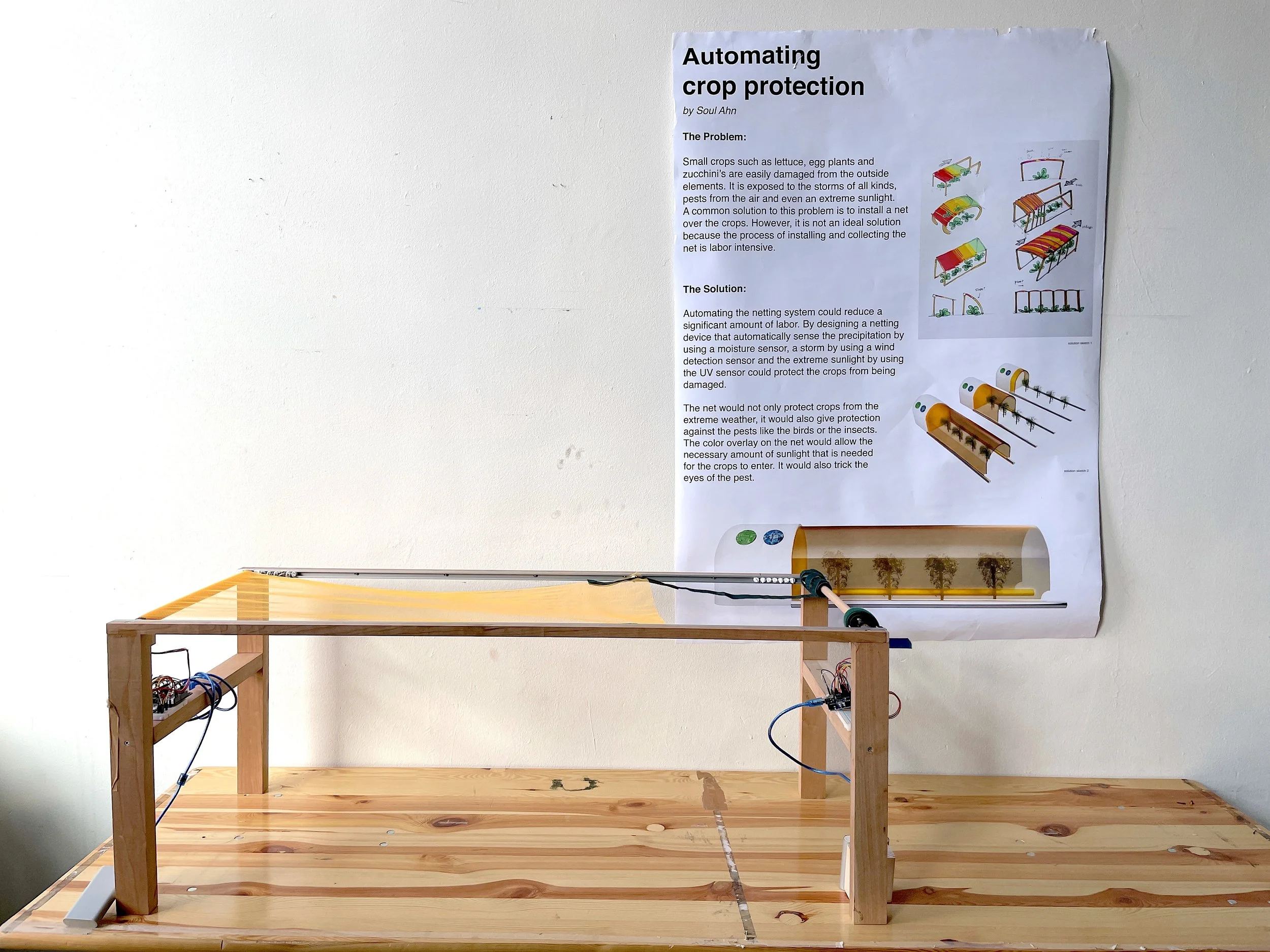
Video - A working prototype
A detailed description of the project - What is it about? How does it work?